Start With The Failed Point
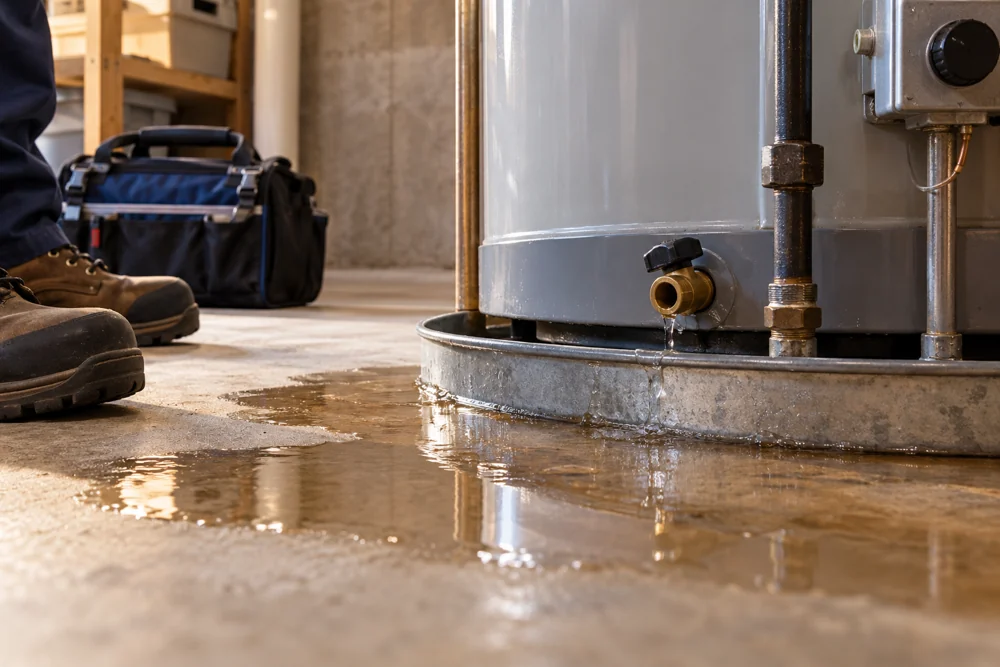
The useful question is which connection is leaking. Water beside the heater can arrive from a fitting above or behind it, so the floor alone should not decide the repair.
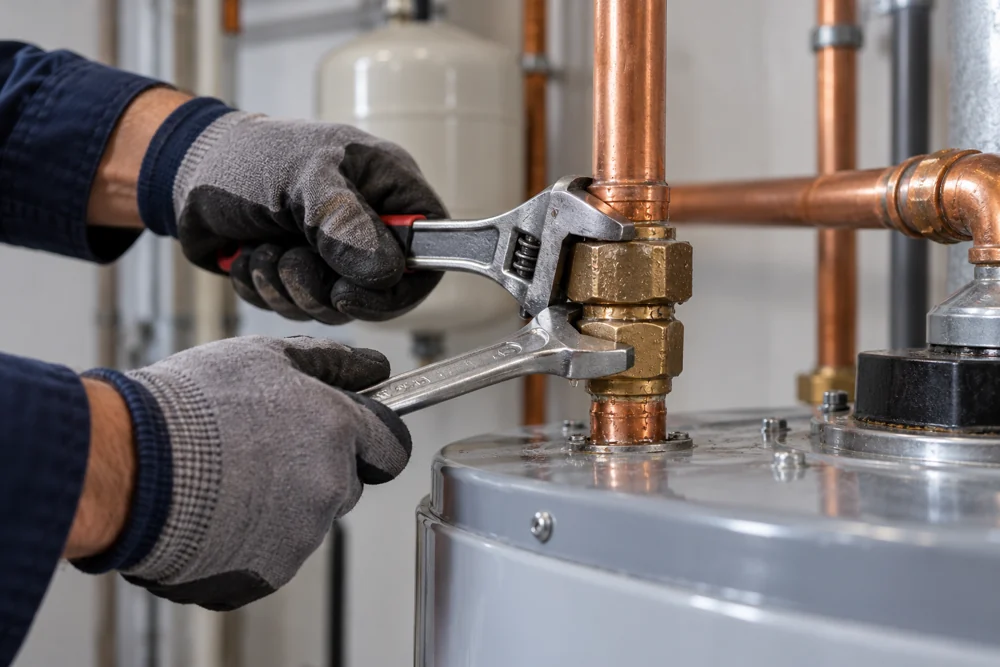
A wet supply line or dripping joint does not automatically mean the tank is finished. Identify the failed connection, understand the repair and get a clear scope before approving work.
Follow the water back toward its starting point.
The seal and connection design matter.
Discuss the repair result and any follow-up.
It is work on leaking water-supply pipework, fittings or connectors serving the heater. Depending on the finding, the repair may involve a connection, a replacement connector, a shutoff valve or a section of pipe. A confirmed leak through the storage tank is a different problem and calls for replacement.
Water spreading quickly? Keep clear of electrical equipment and report the active flow. Request emergency water heater leak help rather than continuing to inspect a wet area.
Smell gas? Leave the building and call 911 from outside. If NIPSCO is your gas supplier, also call 1-800-634-3524. This page covers water connections; follow NIPSCO’s gas-emergency instructions for suspected gas leakage.
A drip at the top of a heater can raise a big replacement question. Begin with the water path, the connection and the equipment condition.
The useful question is which connection is leaking. Water beside the heater can arrive from a fitting above or behind it, so the floor alone should not decide the repair.
Ask whether the proposal covers a connector, adapter, valve or pipe section. That makes the scope easier to understand than a general promise to “fix the plumbing.”
Accessible water-heater pipework and concealed plumbing are different scopes. Clarify access, further investigation and charges before anyone opens a wall or expands the work.
Give the Kokomo address and describe the equipment location. Mention basement stairs, a narrow utility closet or a rental property where somebody else must approve the work.
Not sure whether it is the pipe or the heater? Describe the first wet spot and when it appears. You do not need to identify the fitting to request an assessment.
Discuss The LeakConfirm the scope with the attending provider. A useful assessment connects the visible symptom to a specific piece of work.
These observations help describe the problem. They are clues for the visit, rather than a remote diagnosis of the failed part.
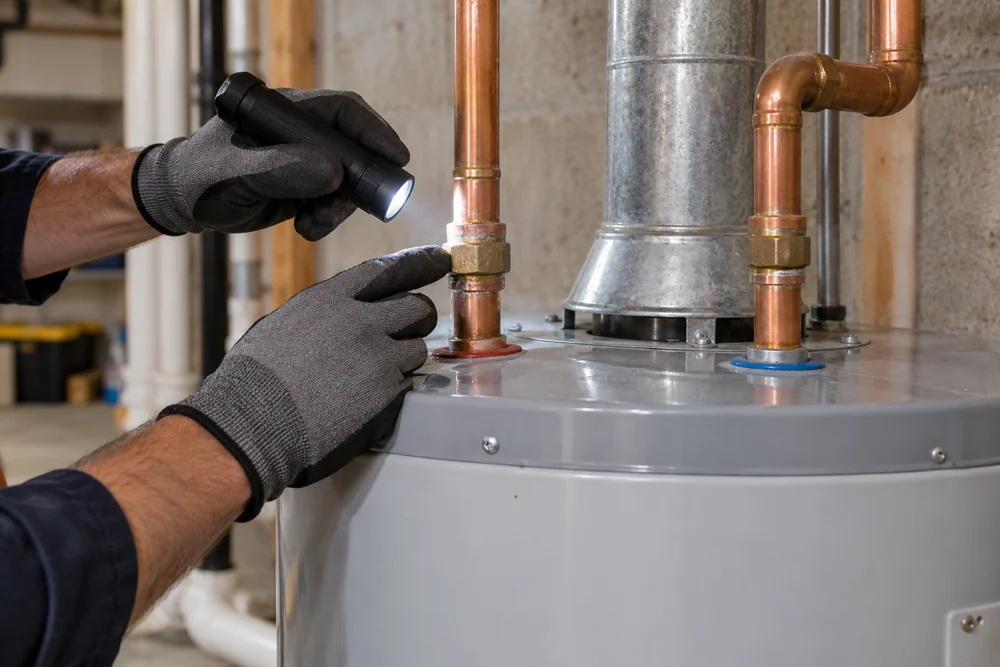
Water appears at a hot or cold connection and runs down the jacket. Note the highest point you can see wet without moving the heater or touching hot parts.
Say whether the water is around an end fitting or along the connector body. Those locations can lead to different replacement decisions.
Report the position and any safely visible stain or deposit. The provider should assess the joint and surrounding pipe condition, not rely on the stain alone.
Water around the handle, body or pipe connection needs distinguishing. Tell the provider if the valve also seems unable to stop incoming water.
Have the installation date and paperwork ready. Connections can need attention on a recently installed heater; the actual source should be demonstrated.
Moisture spread over cold pipe surfaces may involve condensation. A separate active leak can exist nearby, so the water path still needs assessment.
The connection design matters as much as its location. Report what you can see from a safe position and leave the parts assembled.
| Where Water Appears | What Needs Distinguishing | Useful Detail For Your Call |
|---|---|---|
| Hot Or Cold Connection At The Heater | The adapter or connector seal, nearby water tracks and the condition of the tank connection. | Which connection first becomes wet and whether work was done recently. |
| Flexible Hose Or Corrugated Connector | Leakage at the end connection versus a damaged connector body. | The visible location, connector type and any safely readable markings. |
| Copper Pipe Joint Or Union | The joint design and the condition of the adjoining pipe. | Whether the moisture recurs constantly or after hot-water use. |
| Water Shutoff Handle Or Body | A valve-stem or body leak versus leakage at a pipe connection. | Whether the valve is accessible and whether it has been operated recently. |
| Damp Cold-Water Pipe Surface | Condensation versus an active leak at a connection. | Whether droplets cover a wider surface or start at one point. |
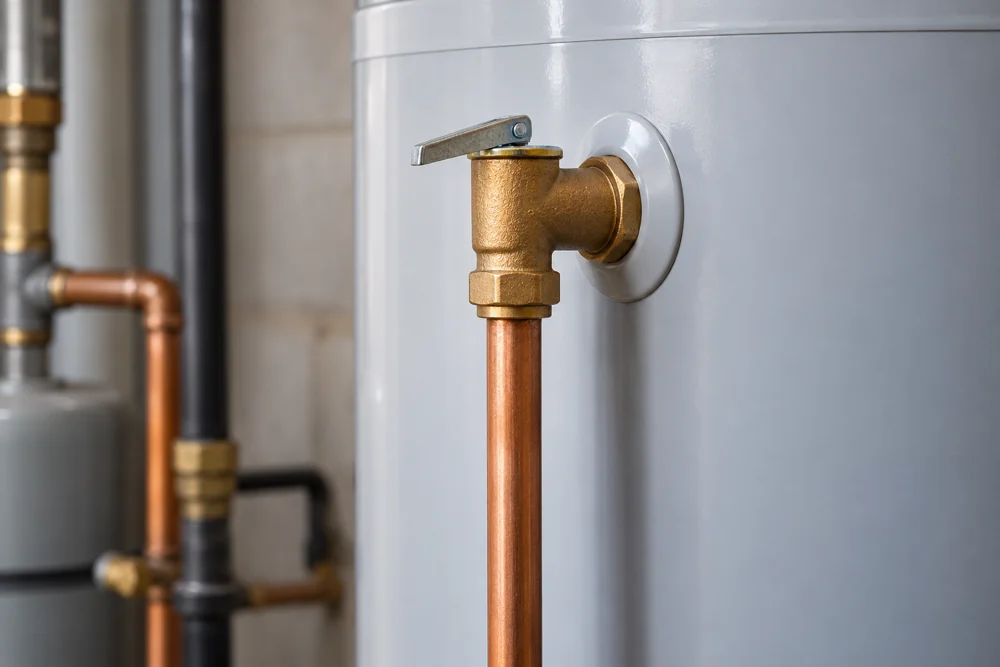
| Relief Discharge Pipe | Safety-valve discharge versus a leak in nearby supply pipework. | Whether discharge follows heating. Never block the outlet. |
For a puddle without an obvious source, use water heater leak detection. Manufacturer background: A. O. Smith’s leak-source bulletin.
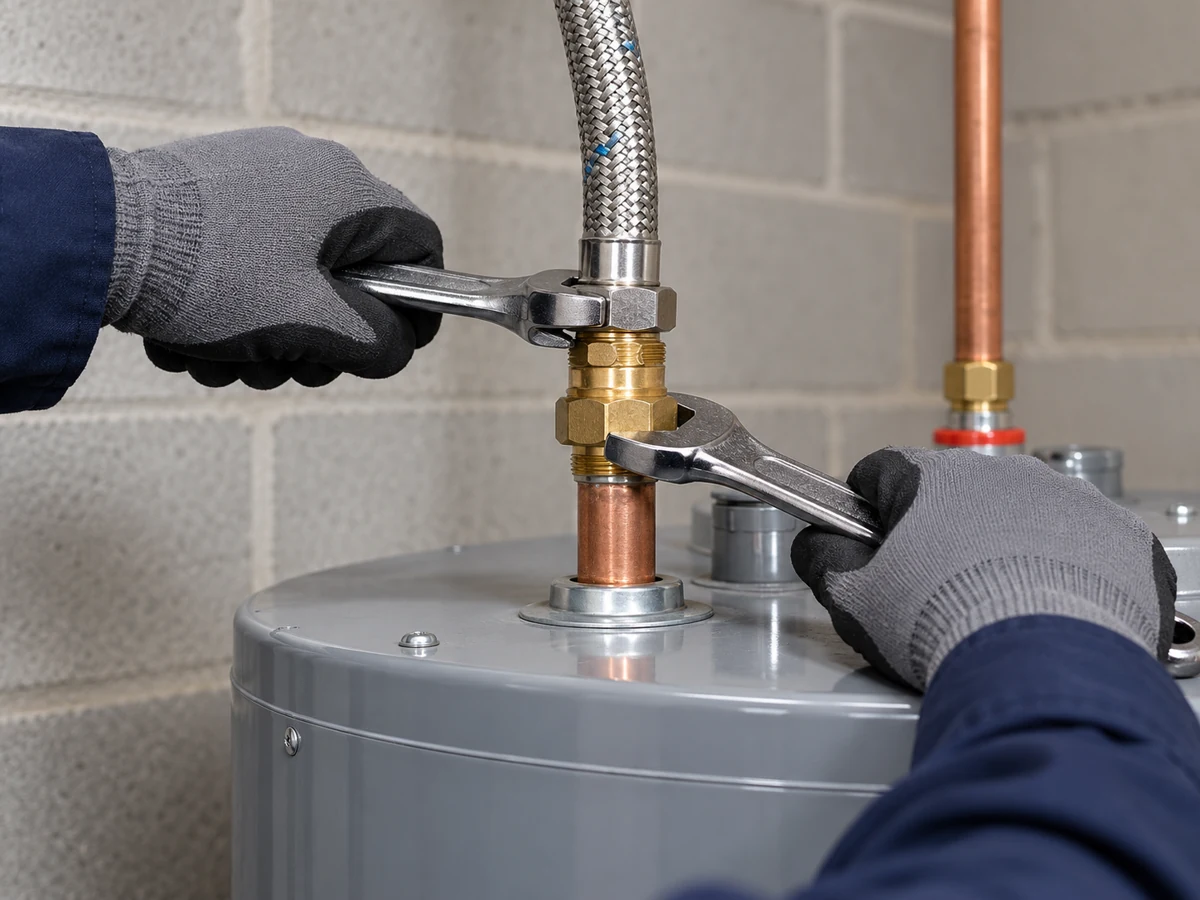
A failed external connection can be a repairable piping problem. It does not, by itself, prove that the storage tank has failed.
Ask which surface or component is releasing water and why the proposed work fits that finding. If the connection to the tank is damaged or the tank itself leaks, the options can change.
That cannot be established from a puddle or photograph. A worn seal, damaged connector or unsuitable joint needs the right correction. Avoid forcing a fitting on an old heater; ask what the provider found before approving a repair.
For recent installations, see Whirlpool’s guidance on connection leaks. For a confirmed tank leak, explore water heater replacement.
Pipework is not one interchangeable set of parts. The heater instructions, connector design and actual condition need to agree.
Some water-heater connectors seal against a gasket at the nipple. SharkBite’s connector guidance, for example, says thread tape is not required for that design. This is not a rule for every fitting: the exact product instructions determine the sealing method.
Length, routing, pipe material and the heater layout affect the choice. BrassCraft distinguishes flexible stainless connectors from copper connectors that can kink in tight bends. Ask how the proposed part fits the available space without forcing the connection.
When the symptom is relief-valve dripping during a heating cycle, supply pressure and thermal expansion may need assessment. A pipe repair should not be used to disguise an unresolved discharge problem or obstruct the safety outlet.
Cool pipe surfaces can collect moisture under humid conditions. That is different from water escaping at a joint. Explain whether the wetness covers a wider cold surface or begins at a specific connection, and ask what was confirmed at the visit.
Technical background: SharkBite connector seals · BrassCraft connector guidance · thermal expansion · condensation.
You should be able to understand what failed, what work is proposed and how completion will be checked.
Describe the timing and any recent work first. Ask the provider to trace accessible moisture and distinguish the connection from the tank, relief discharge or another water source.
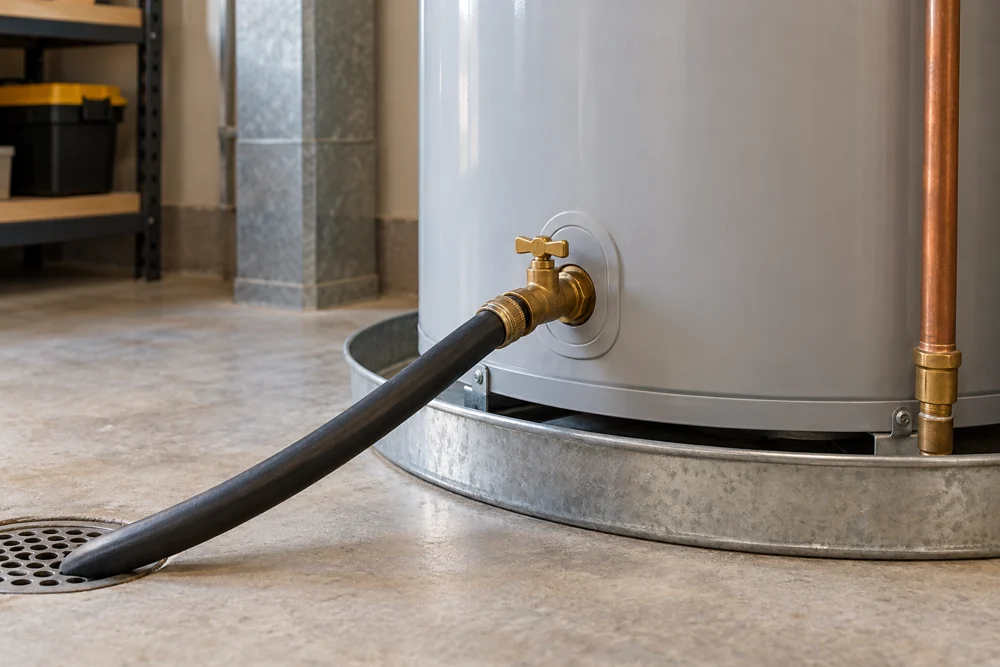
Discuss how the heater’s water supply will be isolated, whether draining is needed and how the work affects hot-water availability. Mention any valve that is stuck, leaking or difficult to reach.
Confirm the connector, valve or pipe section being replaced and any adjacent work. Ask how product compatibility and installation requirements are addressed before authorizing the scope.
Ask which repaired connections were checked after water service resumed, whether a heating-cycle observation is needed and what to do if moisture returns. Keep the work description and applicable warranty terms.
The work should address the failed part and any directly related installation issue. Confirm the full scope before work begins.
A faulty external connector or adapter can lead to focused work at the heater. Clarify whether the proposal replaces the complete connector or a serviceable part allowed by its instructions.
Understanding the leak source →Ask how much accessible pipework or which valve needs replacing. If the fault extends behind a wall or to other plumbing, agree on investigation and additional charges separately.
Help with an active leak →A confirmed tank leak or repeated safety-valve discharge needs a different decision. The finding should explain why connection repair would or would not resolve the problem.
Water heater replacement →A leaking fitting, a failed supply line and a dripping valve stem each needed work at a different repair point. These job histories focus on the connection repaired and the reported result.
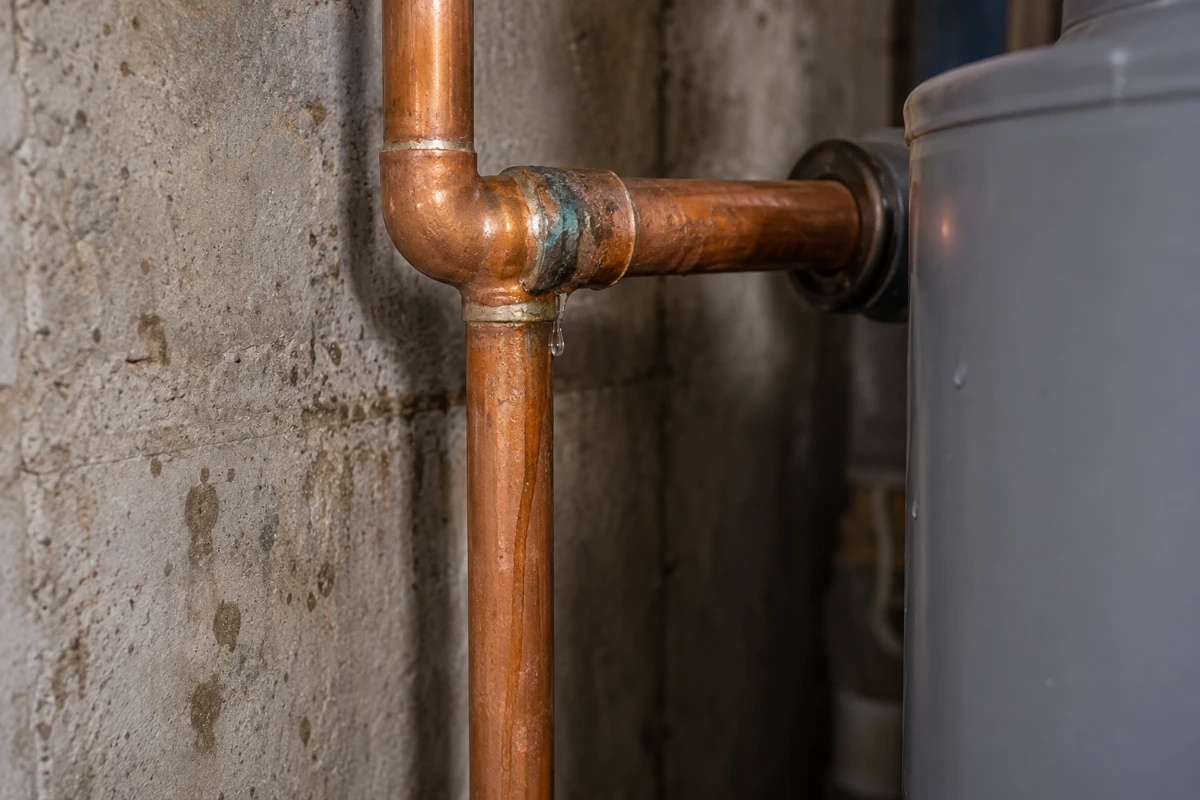
Water kept collecting beside the heater even though its exterior looked dry. The homeowner had mopped the floor repeatedly; the connection behind the tank was the point that needed attention.
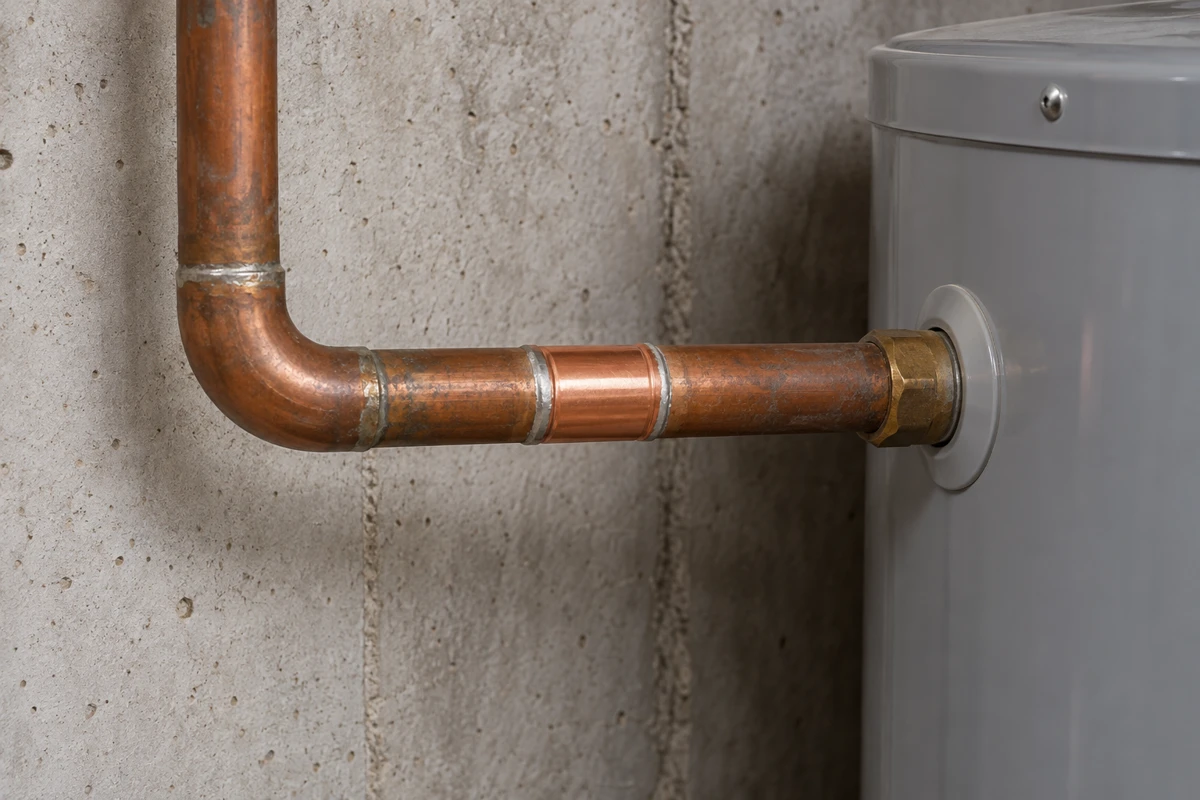
Testing located a weeping fitting behind the heater. That connection was repaired, the floor dried and a water-leak sensor added. The work addressed the fitting instead of replacing the heater.
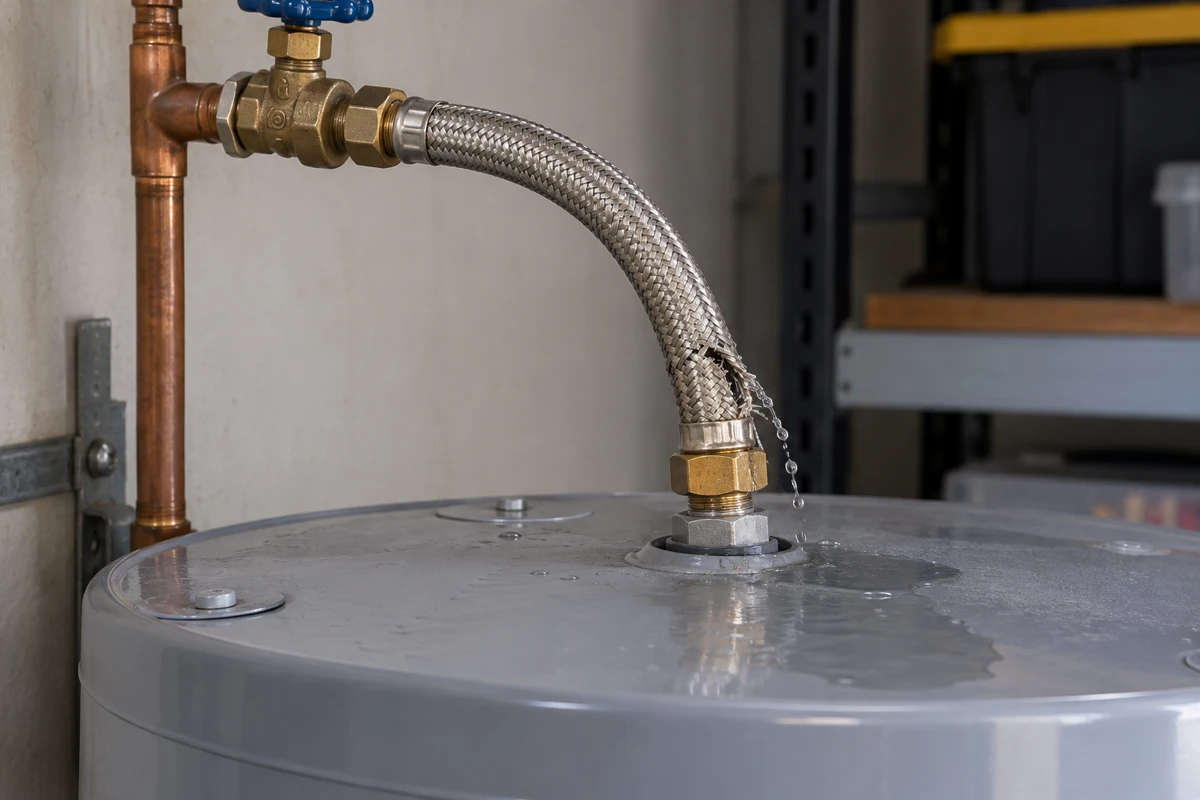
A water-supply line failed and water spread across the garage slab. The immediate repair point was the failed connection serving the heater.
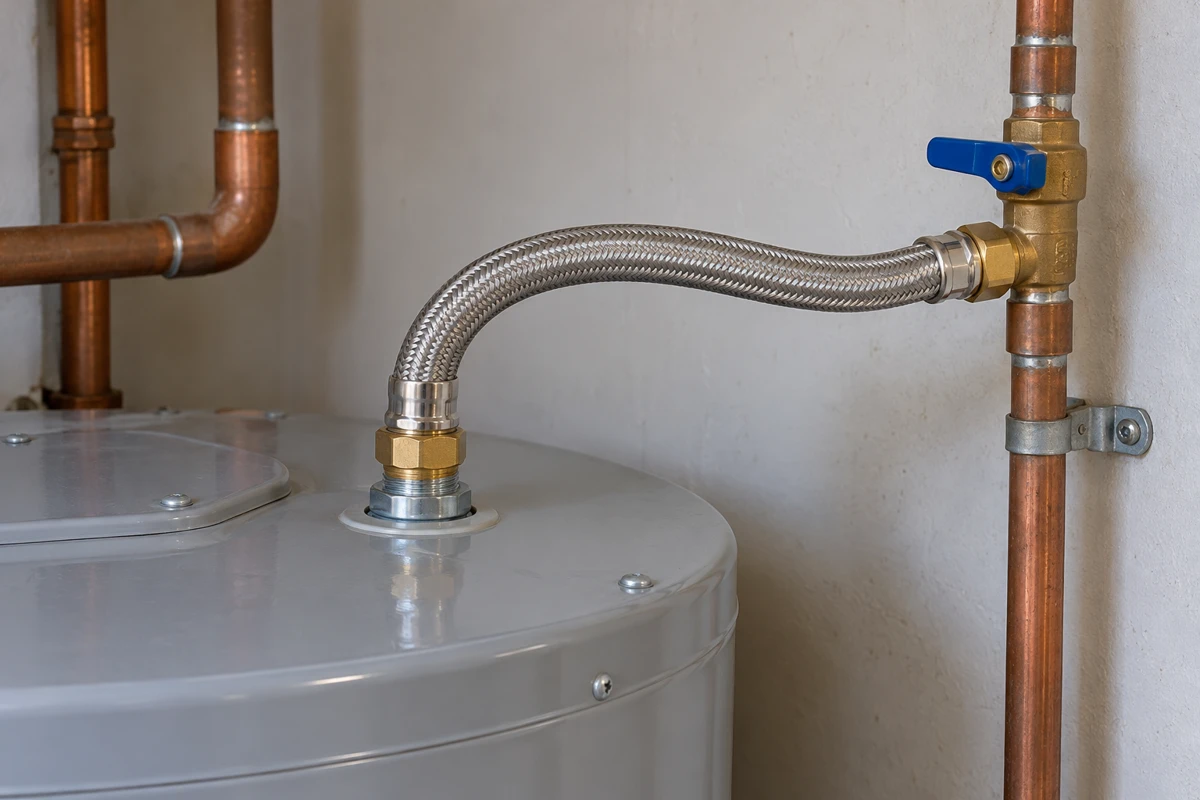
Water and power were shut off, the failed connection was repaired and the heater checked for further damage. In this job history, flooding stopped within an hour and the heater returned to service.
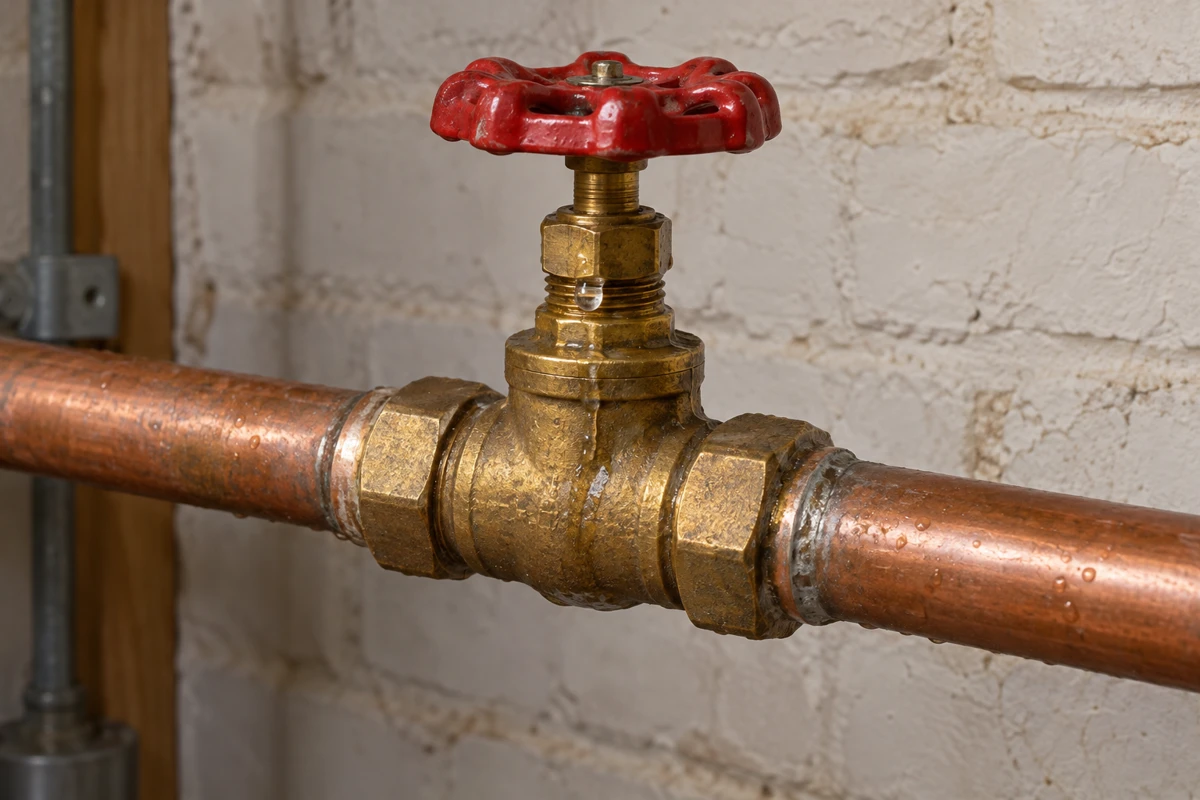
Cold-water pipes stayed wet in a damp basement through summer. The homeowner suspected the pipes themselves, but the active leak was at a valve stem.
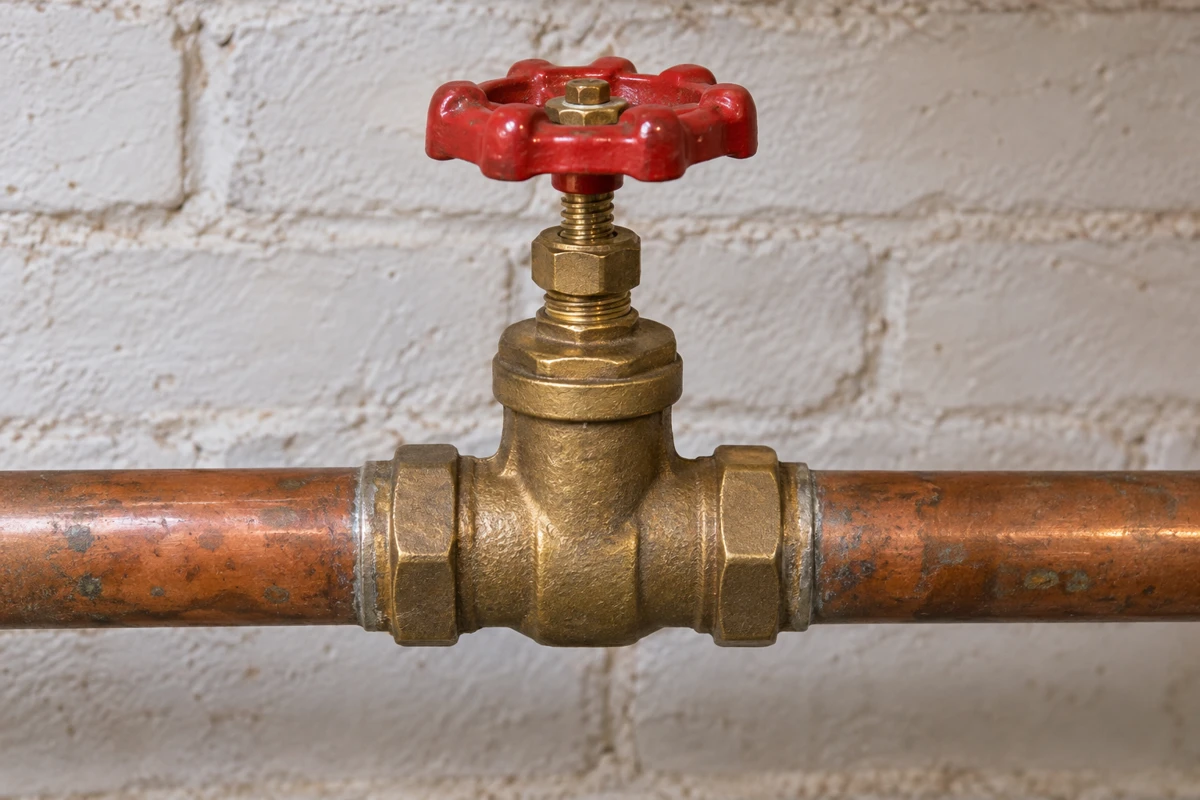
The pipework was found to be sound. The repair was made at the leaking valve stem, addressing the active drip without replacing sound pipework.
A similar wet spot at your property? Explain where the water first appears and whether it is actively spreading.
Request A Connection AssessmentConfirm that the attending provider handles your equipment and connection type. Model instructions and local requirements govern the installation.
Keep water-supply pipework separate from gas piping in your description. Explain whether work is close to the vent or controls, and report any suspected gas leakage as an emergency.
Gas water heater repair →Tell the provider if water has reached the covers, controls or surrounding electrical equipment. Safe isolation needs attention before pipework is disturbed.
Electric water heater repair →Describe the external hot and cold connections and any service valves. A leak inside the appliance or at a condensate drain needs model-specific assessment, not an assumption that a supply hose is responsible.
Tankless water heater repair →A few accurate details make the first conversation more useful than a guess about which part has failed.
Start with the full address, the heater type and where the connection is wet. The provider can then confirm coverage, capability and a visit time.
Give your full address when requesting pipe-leak help in these Kokomo neighborhoods. The provider confirms coverage and appointment availability.
Compare the visit charge, labor, the parts being replaced and any work needed to isolate the heater. Access to an exposed connector is different from opening a wall or replacing a longer pipe run. Ask whether a failed shutoff or damaged adjacent connection changes the estimate.
For a repeat visit, clarify what the original charge covered and which new finding requires additional work. Confirm the attending company, payment terms and the written repair scope before proceeding.
The work should end with an understandable result, a record of the repair and clear instructions about any remaining issue.
Ask which repaired points were observed after water service resumed and whether the relevant operating conditions were reproduced. For an intermittent drip, clarify what was confirmed and what still needs watching.
Keep the invoice and part description. If moisture returns, note whether it starts at the repaired point or somewhere else. A safe photograph of the first wet spot is more useful than an assumption that the same part has failed again.
If a pressure or expansion issue was identified, ask whether that cause was corrected or needs a separate visit. Replacing a connector should not leave that finding unexplained.
Practical answers about connectors, valves, sealing methods, repeat drips and repair access.
Yes, an external supply connection can be a separate repair when the heater and its connection points are suitable to retain. The assessment should identify the failed part and explain why a connector or pipe repair addresses the leak.
Not necessarily. Hot and cold water connections can release water that runs down the outside. Ask for the source to be traced. A confirmed leak through the tank itself is a replacement issue, but water at an upper connection does not establish that finding on its own.
Do not rely on an outside wrap as the completed repair of a pressurized water-heater connector. Keep clear of hot surfaces and electrical hazards and arrange assessment. The repair needs to address the failed connector, fitting or seal using the appropriate product instructions.
No. Some connectors use a gasket to seal against the nipple; others use a different joint design. SharkBite’s referenced water-heater connector instructions say tape is not needed for that gasket-sealed connection. The exact fitting instructions determine the method, so do not apply one rule to every joint.
Ask about the condition of each connector and why replacing one or both is proposed. A leak on one side does not by itself explain the scope on the other. Confirm the parts, labor and condition findings in the quote.
The original source may be unresolved, a component may need replacement or the joint may need a different correction. Ask for the repeat leak to be assessed rather than continuing to tighten it. Mention when it returns and what work was previously done.
Do not assume a universal fit. Suitability depends on the product, pipe material, equipment instructions and applicable installation requirements. Ask the provider to explain the selected connection method and follow its manufacturer’s instructions.
Yes. Report whether the visible moisture is near the handle, valve body or pipe connection. Also say whether the valve appears able to isolate the heater. A leaking or ineffective shutoff can change how the repair is arranged.
Yes, condensation is one possible explanation for wet cold surfaces. It still needs distinguishing from water escaping at a joint. Explain whether droplets are spread over the surface or begin at one connection, and avoid assuming that all recurring moisture is harmless.
Pressure and thermal expansion can be relevant, especially when the relief discharge drips during heating. Ask whether those checks are indicated by the symptoms. Correcting a connection and addressing an expansion-control issue can be separate parts of the work.
That depends on where the suspected fault is and what is accessible. An exposed water-heater connector repair does not automatically include concealed plumbing investigation. Ask for the reason, scope and price before authorizing a wall opening.
Ask for an estimate after the provider understands the access, isolation and proposed repair. A connector change and a longer pipe replacement have different scopes. Parts availability, a failed shutoff or another fault can change the time needed.
Yes. Report the leak to the installer and have the installation date, invoice and equipment details ready. Ask for the source to be identified before deciding on a repair or replacement. Warranty coverage depends on the actual terms and findings.
Keep away from electrical hazards and hot water. If there is no gas emergency, you know the heater’s water shutoff and can reach it safely from a dry position, close it without forcing it. Otherwise keep clear and request urgent help. For gas odor, leave and call 911 from outside.
Technical References · Checked 2 November 2026. General guidance; the exact product instructions and on-site findings govern the work.
A. O. Smith: Leak SourcesWhirlpool: Connection LeaksSharkBite: Connector InstructionsBrassCraft: Connector FAQsA. O. Smith: Thermal ExpansionA. O. Smith: CondensationCall with your address, heater type and the first point you can see wet. Ask about assessment, repair scope, visit fees and availability.
Call (765) 227-1552LeakRescue Pros provides water-heater information and service requests. The attending provider confirms coverage, capability, scheduling, pricing and work terms.