An Explanation Before A Part Swap
“The water is cold” is the starting complaint. The useful answer identifies whether the problem involves the heater, its electrical supply, a control or the way hot water is being delivered.
A cold shower does not tell you which part failed. Get help assessing heating elements, thermostats, repeated trips and water leaks before approving a repair or replacing the tank.
Yes, when the tank is serviceable and assessment identifies a repairable element, thermostat, control or external water connection. A confirmed leak through the storage tank generally calls for replacement. No hot water, a short supply and a puddle are different complaints; the repair decision should explain the finding behind each one.
A thermostat set to “off” is not a substitute for isolating electrical power. Do not repeatedly reset a tripping breaker or a high-limit safety control. Tell the provider about the trip, leak or unusual heat without removing panels to investigate. For spreading water, request emergency water-heater leak help.
Understand the proposed work, the price and the result being checked before you approve it.
“The water is cold” is the starting complaint. The useful answer identifies whether the problem involves the heater, its electrical supply, a control or the way hot water is being delivered.
A replacement element needs the correct specifications and fit. A control needs to suit the equipment. Ask which part is proposed and why it addresses the fault found.
Review diagnosis, parts, labor and any separate plumbing or electrical work together. Confirm who will attend, what the visit costs and how a further finding changes the quote.
Keep the invoice, part description and explanation of the result. Ask what heating and leak checks were completed and what to report if the original problem returns.
Not sure whether to call for a leak or a heating fault? Describe both. Water on the floor and loss of hot water need to be considered together.
Discuss Electric Heater RepairThe attending provider confirms equipment capability, coverage, fees and the required scope at your property.
The timing and location of a symptom are useful. Opening the heater to investigate is not part of preparing the call.
Report whether the whole home is affected or only one fixture. Mention any known outage or recent heater work without resetting equipment to create a test.
Explain what changed and roughly when the water turns cool. Reduced heating, delivery conditions and demand need distinguishing before choosing a part.
Leave a repeatedly tripping circuit off and arrange qualified assessment. Do not replace the breaker with a larger one or keep restoring power to force the heater to run.
Keep people away from scalding water and request assessment. Do not open control panels or keep changing settings to work around unexplained overheating.
Stay clear and mention the location. The provider needs to distinguish water running down from above from a leak near an element seal or the tank itself.
Say whether it was drained, had a part replaced or was newly installed. That history can change the assessment; it does not prove the new part is faulty.
Use the pattern to describe the problem, not to order a part before the fault is identified.
| What You Notice | Assessment Focus | Useful Detail To Report |
|---|---|---|
| No Hot Water Anywhere | Power supply, the upper heating circuit and the applicable controls. | When heating stopped and whether there was recent work or an outage. |
| Brief Hot Water, Then Cold | Heating performance, lower heating circuit where applicable and delivery conditions. | Which fixtures are affected and whether demand has increased. |
| Repeated Circuit-Breaker Trips | Electrical fault assessment at the heater and supply as indicated. | How often it has tripped; leave it off rather than repeat the test. |
| High-Limit Control Has Tripped | The reason for overheating or the control’s operation on that model. | Any earlier reset or repair already carried out. |
| Water Beside An Electrical Cover | The leak source and any affected electrical components. | Its visible location without touching or opening the heater. |
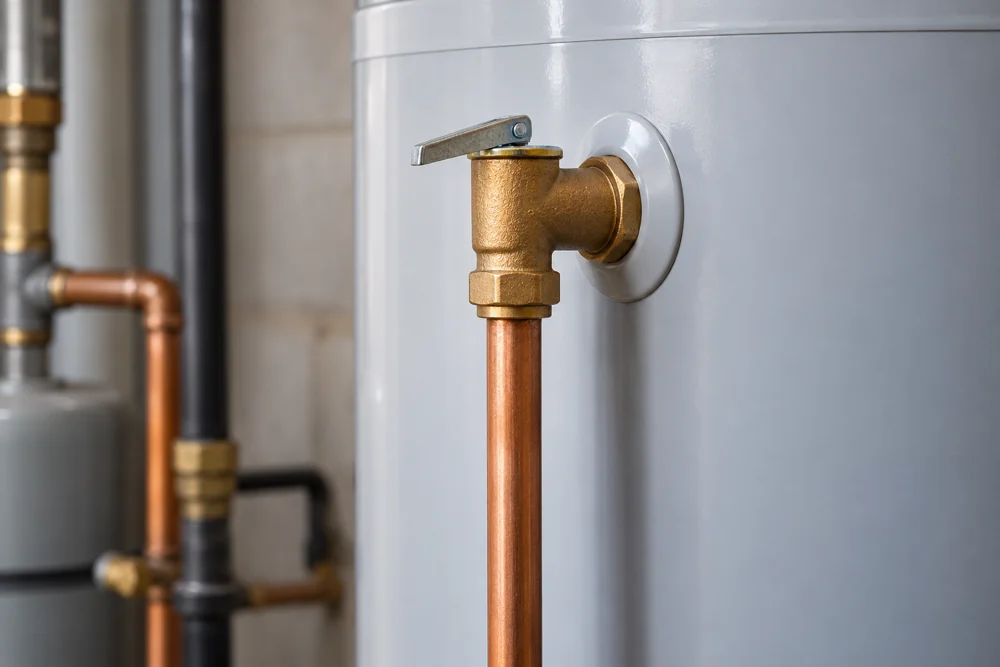
| Relief Discharge During Heating | Expansion control, pressure conditions and the relief valve. | Whether dripping follows hot-water use or occurs continuously. |
A symptom does not establish a failed component. These assessment routes depend on the installed model and qualified testing. Manufacturer background: A. O. Smith’s electric storage heater guide.
Not automatically. The provider must identify whether water starts at an element seal, a fitting above it or the storage vessel.
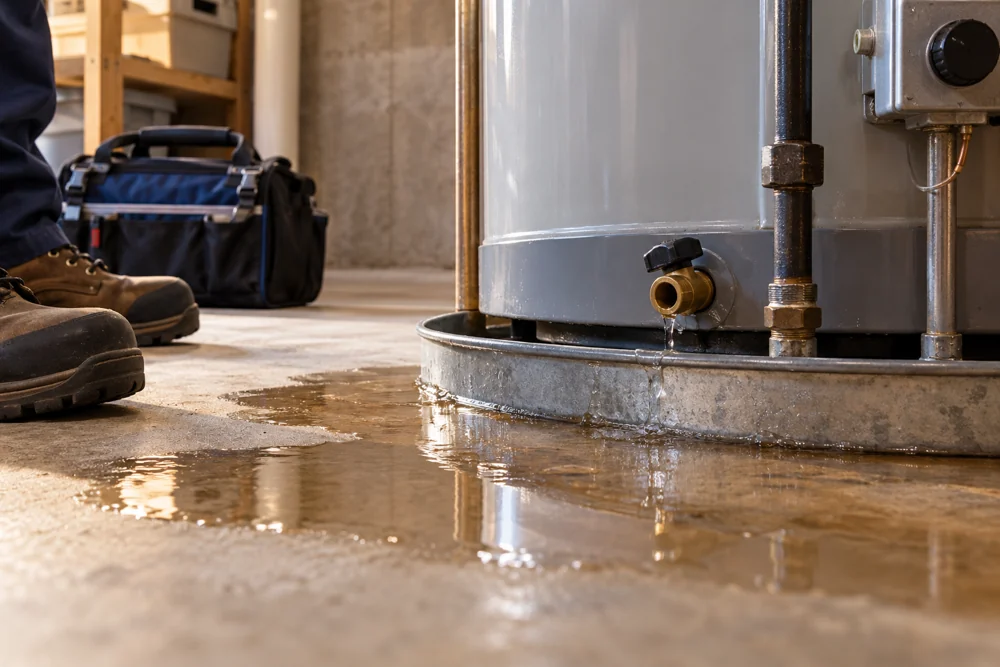
Water can run down the jacket and appear beside an electrical cover. Keep away and describe what you can already see. Do not remove the cover or try tightening an element to trace the source.
Stopping a drip does not establish that wet controls or connections are fit to use. Ask what was affected and how the heater will be assessed before power is restored.
For an uncertain source, start with water heater leak detection. A. O. Smith lists element gaskets among possible electric-heater leak points.
A component replacement should explain the fault being corrected and the checks needed afterward.
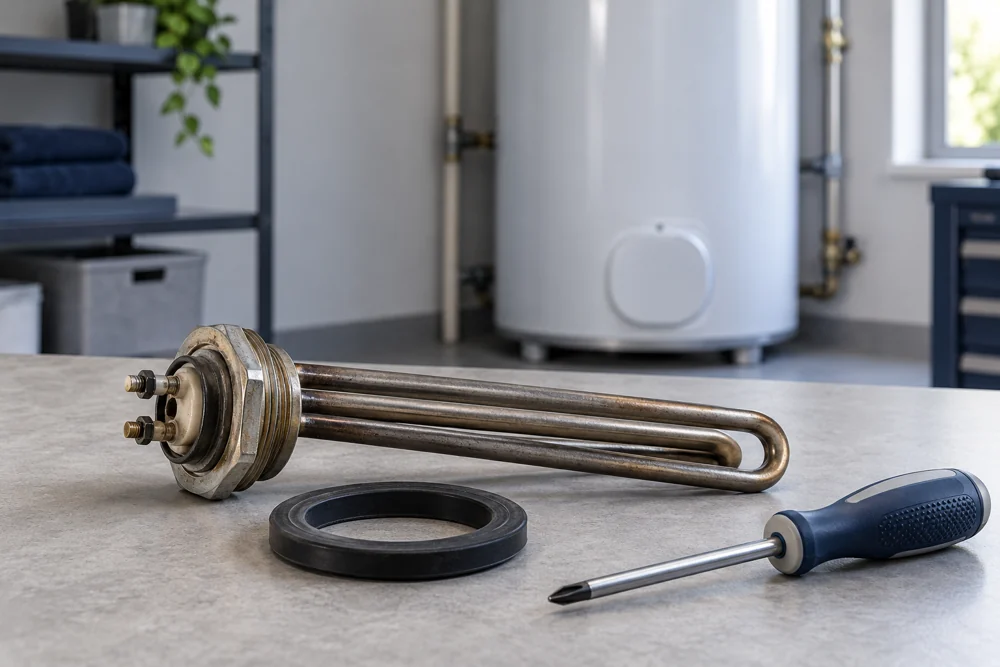
On common two-element storage models, the upper and lower circuits play different roles in heating the stored water. Qualified testing establishes which element, if any, has failed. A replacement needs the specified voltage, wattage, mounting and suitable seal—not simply a similar appearance.
Temperature controls govern heating; a fault can change delivery or cause an unsafe condition. Ask which finding supports replacement and which control suits the heater. Raising settings should not stand in for investigating unexpectedly short or overly hot water.
The high-limit energy cut-off, often called the ECO, is a safety control. A repeated trip needs its cause investigated. A tripping supply breaker is a different device and complaint; neither should be bypassed or treated as a routine daily reset.
A leaking supply joint, drain valve or relief outlet can require water-side work while the storage heater remains in place. The repair should follow the identified leak and any pressure finding, with electrical exposure considered separately.
Technical background: A. O. Smith’s standard electric service topics and Rheem’s electronic-control electric heater manual. Use the instructions for the actual model; these references are not directions to work on energized equipment.
Use these points to understand the assessment, repair approval and completion checks.
Give your Kokomo address, heater type and the main complaint. Mention a trip, recent draining, earlier repairs and water near electrical equipment. Keep away from wet or damaged equipment.
Ask whether the issue is inside the heater, in its electrical supply or in the water connections. Review the compatible part, labor, visit fee and any separate work before approving it.
Qualified service follows the heater’s isolation, repair and reassembly requirements. If inspection reveals another fault, the revised finding and price should be explained before the work expands.
Ask which connections, electrical conditions and operating checks were completed. Keep the repair record and clarify how long the actual heater is expected to take to recover before judging the hot-water result.
A clear diagnosis makes the repair and replacement options easier to compare.
A diagnosed element, thermostat, seal or external connection fault may be repairable when the tank and affected equipment remain suitable to use. Compare the complete scope and warranty.
Review Elements And Controls →A leak through the storage tank generally calls for replacement. Review capacity, electrical requirements, access, removal, the drain pan and any installation changes identified.
Explore Heater Replacement →If the heater is not proven faulty, discuss delivery, recovery and usage before buying a larger tank. A problem at one fixture may need a different assessment from whole-home cold water.
Age, overall condition, compatible parts and the total proposed work all inform the decision. None replaces finding the actual cause of the complaint.
Three completed leak jobs show why the source matters before choosing the work. Supply connections and expansion control are also relevant to electric storage heaters.
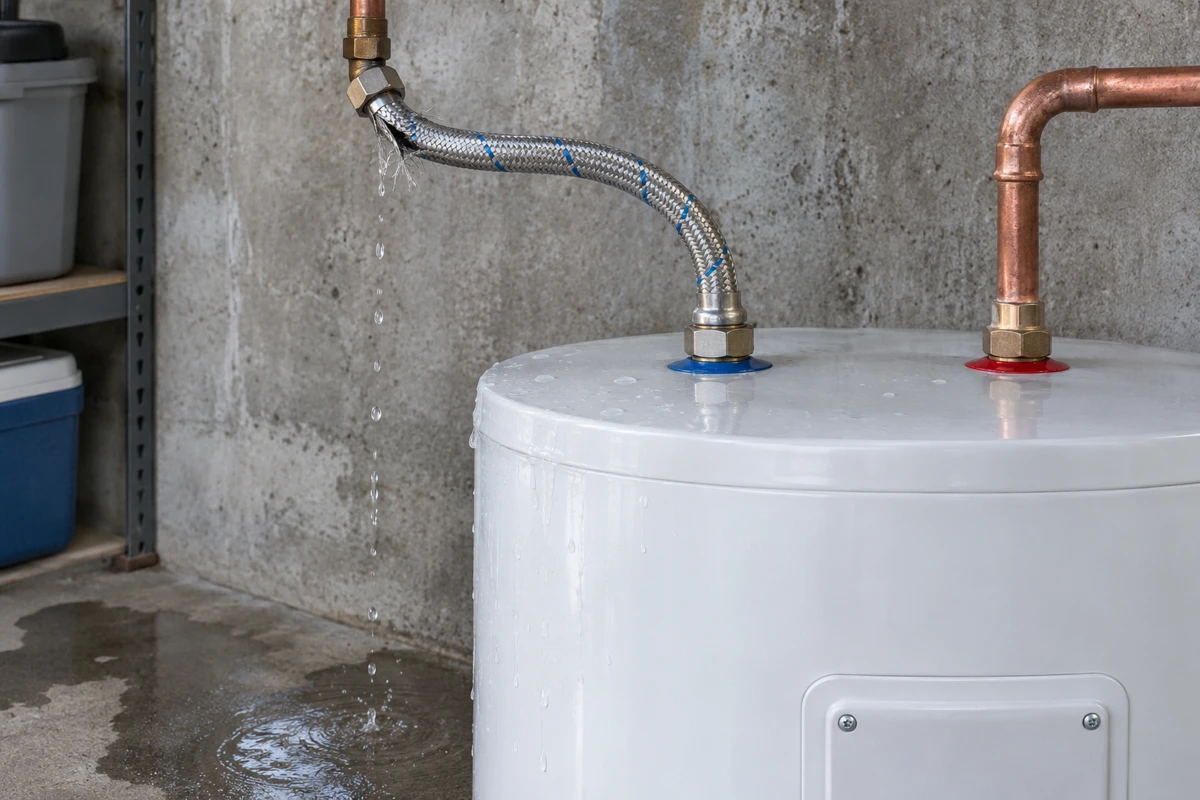
A failed supply line was sending water across the garage floor. The immediate problem was the broken connection, with the heater also needing a check for further damage.
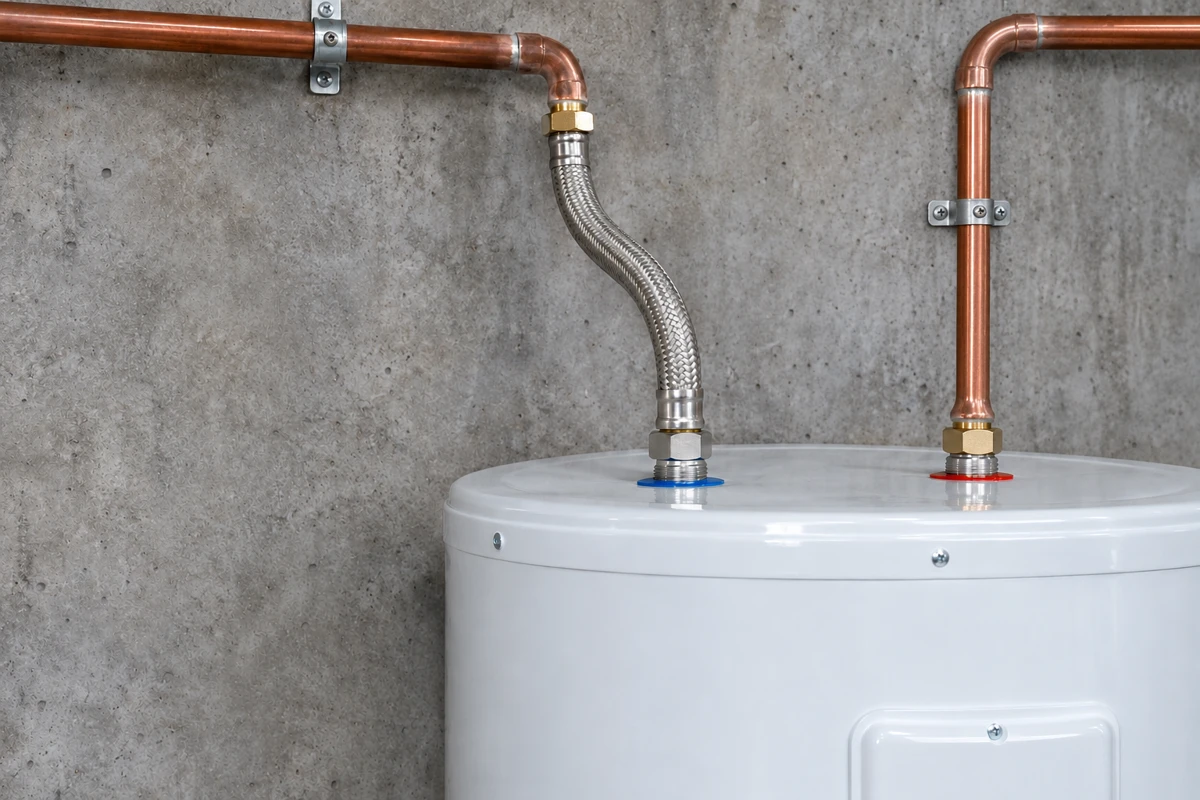
Water and power were shut off, the failed connection was repaired and the tank was checked. The flooding stopped within the hour and the heater was returned to service.
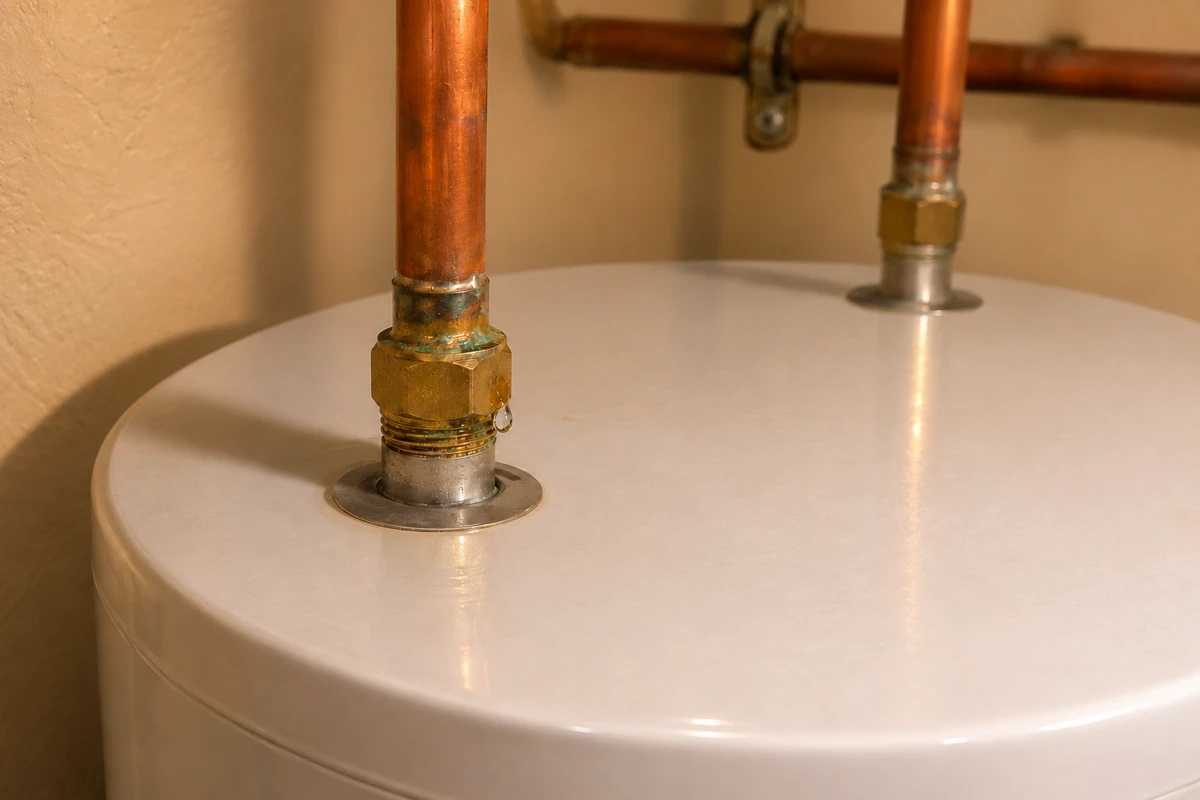
Moisture around a dry-looking heater kept returning. Testing led to a leaking fitting behind the unit rather than a failure through the storage tank.
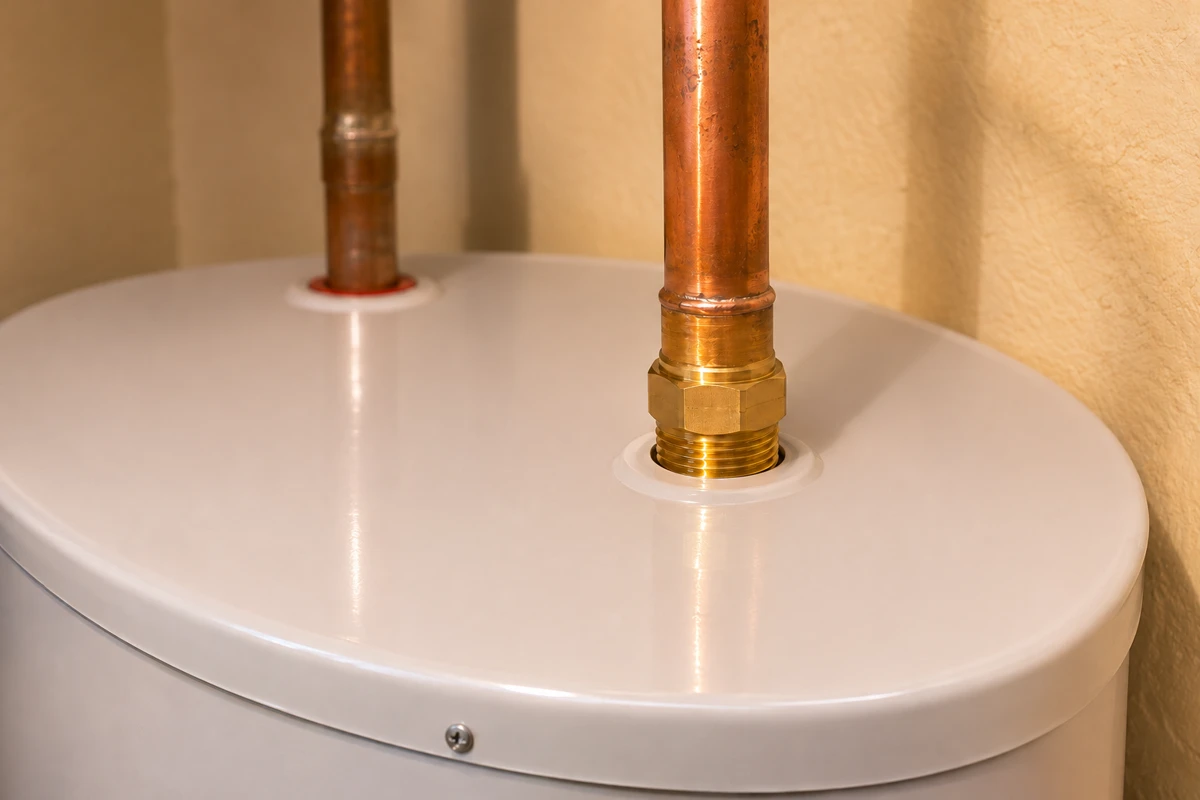
The leaking connection was repaired. The recurring floor moisture stopped, resolving the source that had been easy to miss from the front of the heater.
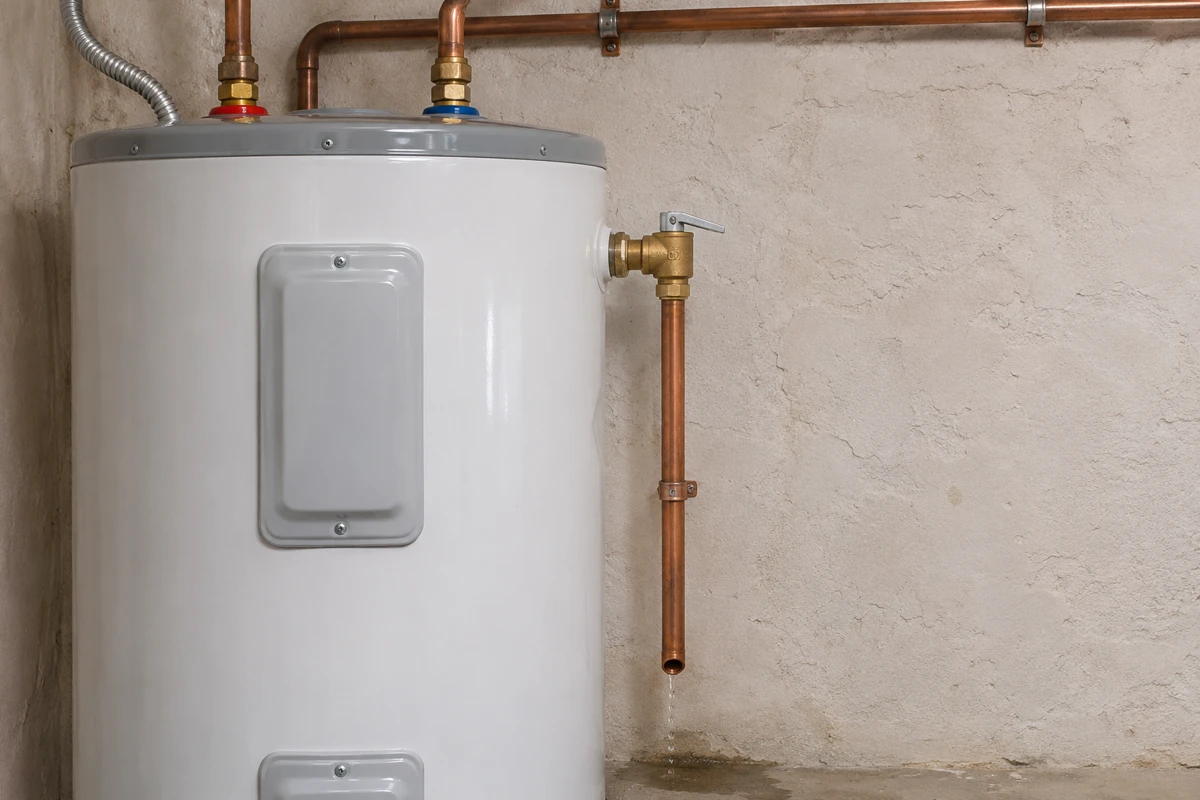
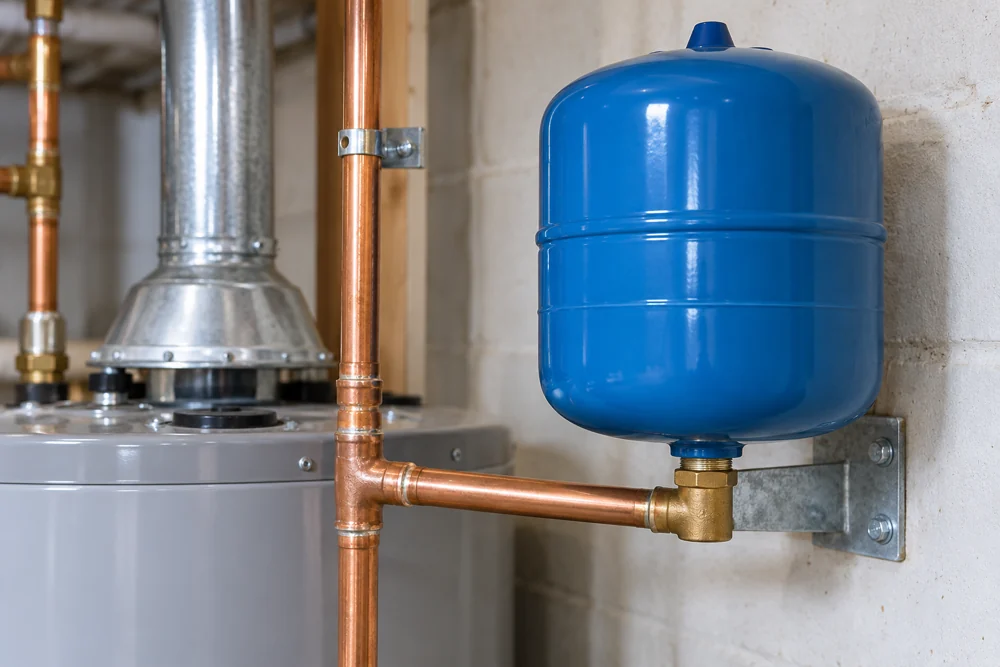
The relief valve dripped whenever the stored water heated. The homeowner feared the whole heater needed replacing, but assessment identified thermal expansion.
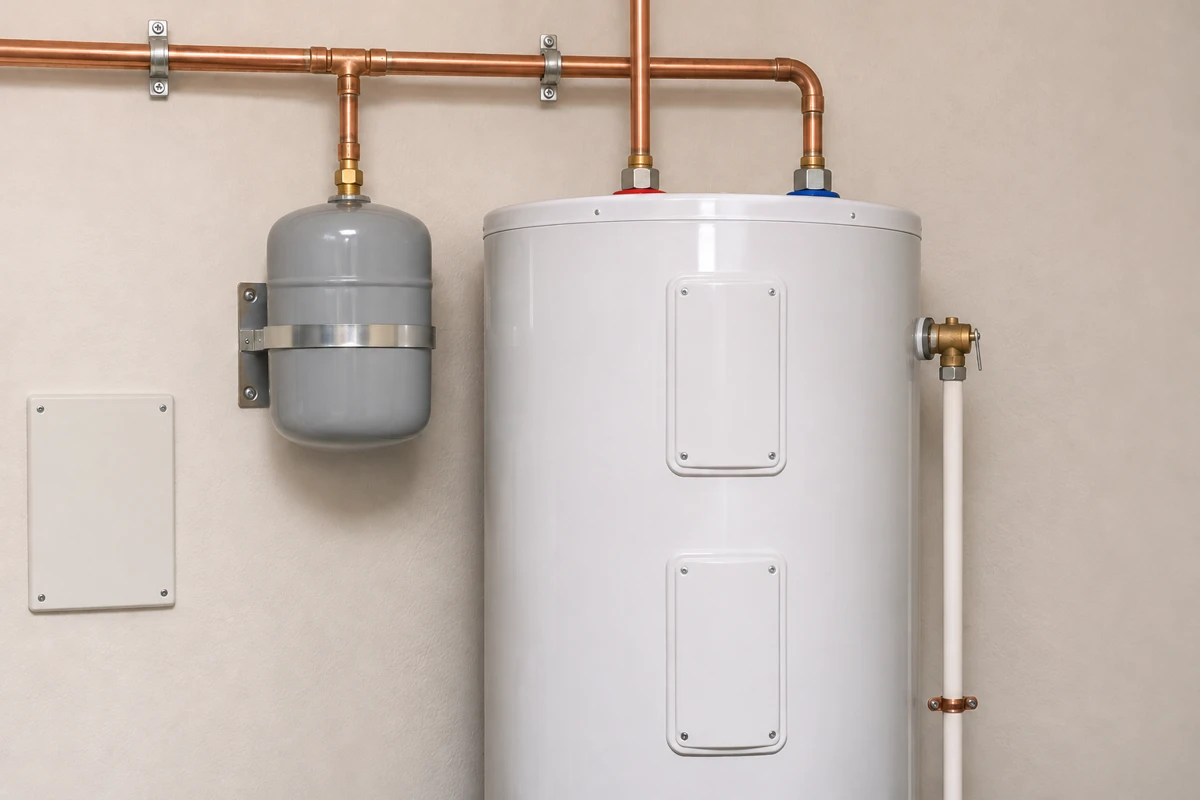
A properly sized expansion tank was installed. The reported leak stopped and the existing heater was retained, avoiding a full water-heater replacement.
These are water-side leak repairs. If an electric heater also has a heating or circuit fault, that needs its own finding and completion checks.
Describe Your Heater’s ProblemIdentify the equipment before choosing a component or assuming how it should operate.
A hybrid can add a compressor, fan, condensate drain, sensors and selectable operating modes. An electric tankless unit has a different heating and control arrangement again. Give the provider the exact equipment type so capability and diagnostic scope can be confirmed.
Voltage, wattage, element design and the heater’s wiring arrangement belong in the selection. A higher-wattage element is not an automatic upgrade. Ask which replacement is specified for the model rather than choosing one by shape or price.
Brand examples such as Rheem, A. O. Smith and Bradford White help identify equipment. Confirm experience and part availability with the attending provider; brand mentions do not establish an authorized-dealer relationship.
Provide the symptoms and access details that help the attending provider plan the visit.
A few details make the first call useful without opening the heater or entering a wet area.
Coverage and appointment availability are confirmed for the individual property.
The diagnostic visit, compatible part, labor, access and any draining or water-side repair affect the scope. Ask whether a supply-circuit finding, part ordering or a return visit changes the total and whether that work is provided separately.
For a Kokomo basement or garage, mention any known flooding or freeze exposure and whether the route to the heater is dry. In cold weather, a change in hot-water demand is also worth describing. These details guide the assessment; they do not establish a failed element or a local water-quality problem.
Heating performance, leak correction and any affected electrical condition need an explained finish.
Ask which component was replaced, why it was selected and which checks were completed. If water had reached an electrical area, the repair record should explain what was assessed before the heater went back into service.
Clarify the expected recovery for the actual tank and conditions. A newly refilled tank does not produce a full supply of hot water immediately; agree on when to contact the provider if delivery is still poor.
Keep the attending company’s contact details and the parts and labor warranty terms. A returning trip, overheating problem or leak should be reported rather than worked around.
Answers about heating elements, thermostats, trips, water leaks and the first service call.
Assessment may involve the power supply, an element, a thermostat, an energy cut-off or another model-specific control. Report whether every hot tap is affected and any recent outage or repair. Qualified testing should identify the cause before parts are ordered.
On common two-element storage models, a lower heating-circuit fault can reduce the useful hot-water supply. Demand and delivery conditions can also change the result. The actual model and testing determine whether an element or another repair is needed.
No. Leave a repeatedly tripping heater circuit off and arrange qualified assessment. Do not fit a larger breaker or bypass protection. Tell the provider about the trip and any water or unusual heat already noticed without opening equipment.
A high-limit energy cut-off is a safety control. Its operation needs assessment, especially if a trip returns. The cause must be addressed before return to service; repeated resets do not establish that the heater is safe or repaired.
Not necessarily. A qualified provider must distinguish an element-seal leak from water running down from above or a leak through the storage tank. The tank and affected electrical components must be suitable to retain before a targeted repair is chosen.
Keep clear and do not open or touch the heater. If the identified heater circuit can be switched off from a dry, safely accessible location, leave it off pending assessment. Do not enter water to reach equipment. Call 911 for an immediate electrical emergency.
Sometimes, when diagnosis identifies a control fault and the heater is otherwise suitable to remain in service. Ask which compatible control is specified, what the repair includes and how the original temperature complaint will be checked afterward.
Do not assume a higher wattage is suitable. The heater model, rated electrical supply and wiring arrangement determine the replacement requirements. Ask the provider to explain the specified part and investigate poor recovery rather than treating a different element as an automatic upgrade.
An electric heating element can be damaged when energized without adequate water around it. After draining or a repair, follow the actual model’s filling and return-to-service requirements. A dry-looking repaired fitting does not establish that the tank is ready for power.
No. A hybrid adds equipment and operating modes beyond conventional resistance heating. Electric tankless units also use different arrangements. Give the attending provider the exact type and model and confirm capability before booking.
Thermal expansion is one possible cause. The provider may also need to assess supply pressure, expansion-control equipment and the relief valve. Never cap or block the discharge pipe to stop a drip. A pressure-related finding needs its own explained correction.
Not automatically. First identify the cause of the heating complaint. Flushing does not repair a failed electrical component or supply fault. Ask whether sediment or scale was actually found and what maintenance, if any, belongs in the repair scope.
Cost depends on diagnosis, compatible parts, labor, access and any separate plumbing or electrical work. Confirm the visit fee, ask for an itemized repair scope and clarify how part ordering, return visits and additional findings affect the price.
Ask about the earliest suitable appointment for your address and equipment. The attending provider confirms availability, capability, parts and timing. No same-day completion is guaranteed here. Describe a complete loss of hot water or active leak when requesting a visit.
Technical References · Refer to the actual installed model’s instructions. These sources explain service topics and do not replace qualified electrical or plumbing work.
A. O. Smith: Electric Use And CareRheem: Electric Controls And SafetyA. O. Smith: Elements And ThermostatsA. O. Smith: Electric Hot-Water DeliveryA. O. Smith: Water Leak SourcesA. O. Smith: Thermal ExpansionA. O. Smith: Filling Before PowerCall with your address, heater type and what changed. Ask about assessment, equipment capability, repair scope, visit fees and availability.
Call (765) 227-1552LeakRescue Pros provides water-heater information and service requests. The attending provider confirms coverage, capability, scheduling, pricing and work terms.