A Model-Specific Starting Point
Rinnai, Navien, Noritz and other units have different service instructions and parts. Share the model, fuel and visible message so the provider can confirm capability before the visit.
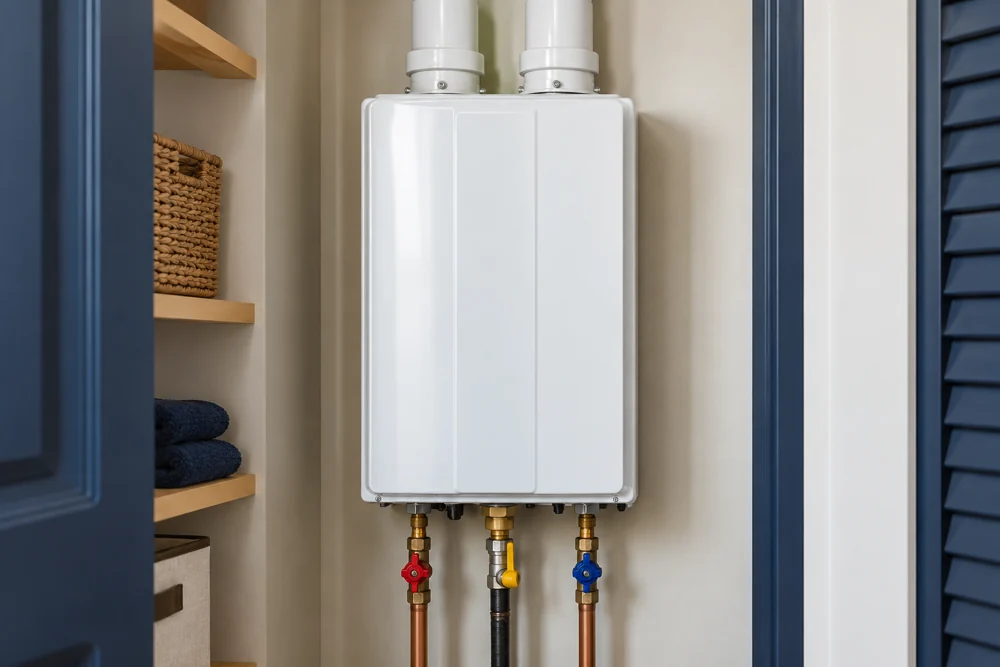
Get help finding why your tankless unit leaks, shuts down or loses hot water. Understand the diagnosis, compatible repair and maintenance findings before approving parts or a replacement.
Often, yes. A diagnosed water-connection, valve or serviceable seal fault may be repairable. Water from inside the cabinet needs a different assessment, including whether an internal component or heat exchanger is affected. The leak source, equipment condition, parts and warranty determine the options—not the puddle alone.
For an active water leak, keep clear of wet electrical equipment and request urgent water-heater leak assessment. Do not open a wet cabinet, tighten unfamiliar fittings or repeatedly reset a unit that shuts down. Describe the visible symptom from a safe position.
Understand the finding, repair scope and checks planned for your equipment.
Rinnai, Navien, Noritz and other units have different service instructions and parts. Share the model, fuel and visible message so the provider can confirm capability before the visit.
A fitting drip, condensate problem and internal leak are different findings. A useful diagnosis explains where water starts and whether the hot-water complaint is connected to it.
Descaling can be appropriate for deposits; it does not repair a split connector or a failed seal. Ask which work addresses the fault and which work is scheduled maintenance.
Review the visit charge, labor, compatible parts and any additional vent, drain or supply work. Keep the completion record and contact details for a repeat complaint.
Your heater works again after a reset, then stops? Report that pattern and any code already visible. It is useful history for the assessment, not proof that the issue is resolved.
Discuss Tankless Heater RepairStart with the installed unit and the reported behavior, then agree on the work the findings support.
A useful description includes timing, affected fixtures and the first visible water location.
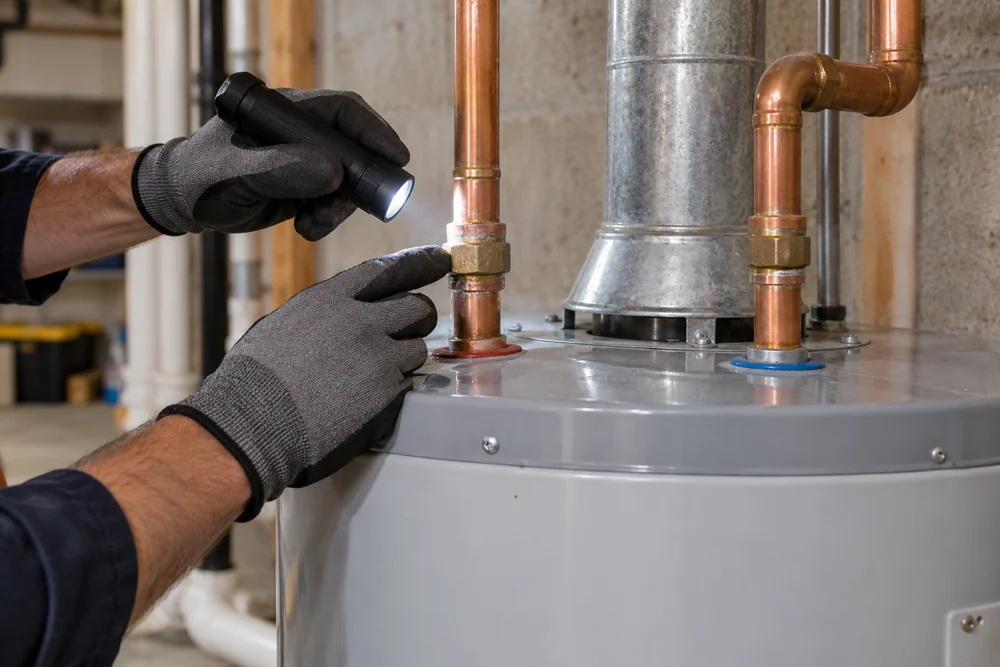
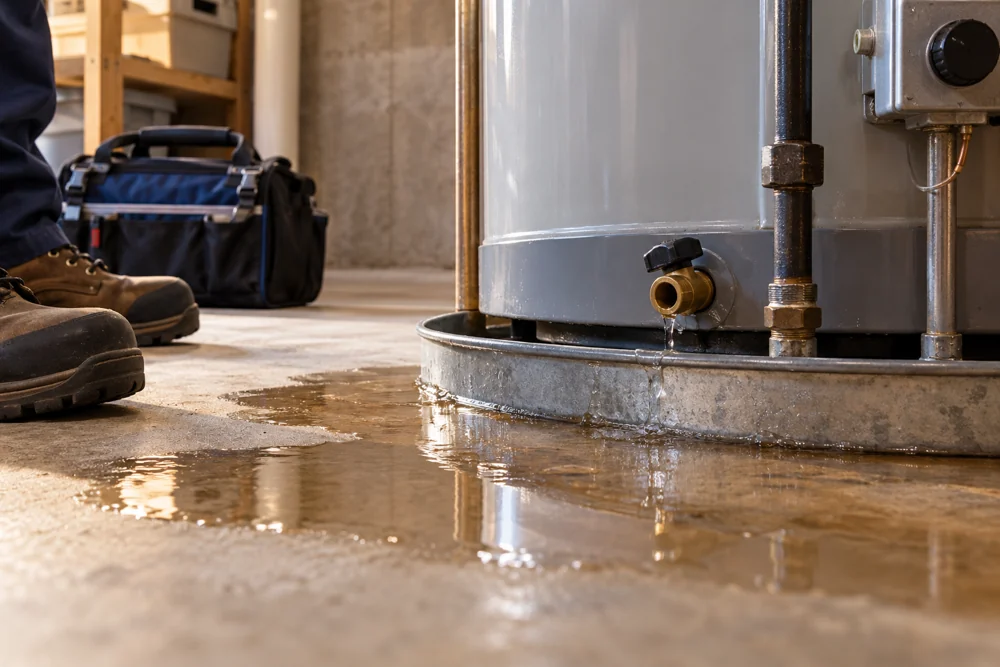
Describe whether the first visible water is at a union, service valve, drain tube or the cabinet edge. Keep the cover closed and stay clear of wet electrical equipment.
Note the exact code and model if visible. Say when it appears: during a shower, at startup or after another fixture opens. Do not translate it using an unrelated heater’s chart.
Report whether other fixtures were running and whether the unit stopped or displayed a code. A delivery issue and an appliance shutdown need distinguishing.
Say whether other hot taps work normally. Flow conditions, a fixture restriction or a unit-side finding can require different work; one cold faucet does not identify a failed heater.
Explain the simultaneous demand and whether this is a new problem. Assessment should separate an operating fault from the unit’s delivery capability under those conditions.
Report known freeze exposure, a power interruption or an outdoor drain issue. Do not use a flame, heat an unknown pipe or force a damaged unit back into operation.
Similar-looking water beneath a unit can lead to different repair decisions.
| What You Notice | Assessment Focus | Useful Detail To Report |
|---|---|---|
| Water At A Union Or Service Valve | The water fitting, seal, valve body and condition around the connection. | The first wet point already visible and any recent service. |
| Water From A Drain Tube | Whether the tube carries condensate, relief discharge or another flow. | Where the tube starts and whether water is escaping its intended route. |
| Water Appears Inside The Cabinet | The internal leak source and affected equipment. | Water at the cabinet edge without removing the cover. |
| An Ignition Or Flame-Related Code | The model’s diagnostic procedure and relevant fuel or combustion conditions. | Exact message, model and the conditions when it appears. |
| Cold Water With No Displayed Code | Flow recognition, delivery and other model-specific operating checks. | Whether all fixtures or only one are affected. |
| Reduced Performance Or A Scale Message | Maintenance history and evidence of restriction or deposits. | Previous service dates and the original complaint before cleaning. |
Error codes describe conditions requiring model-specific checks; they do not automatically identify a failed part. See Navien’s service and troubleshooting FAQs. For an unclear water source, start with leak detection.
A condensing gas unit produces condensate during operation. That water belongs in the intended drainage route, not on the wall or floor.
A disconnected tube, drainage restriction or another leak can leave water under the unit. The provider should identify the source and inspect the relevant trap, drain and any fitted neutralizer or pump.
Not every tankless model has the same arrangement. A water-supply fitting, relief outlet and heat exchanger need their own findings. The unit’s type and the first wet point matter.
Manufacturer background: Navien’s condensing tankless guide. Follow the actual model’s drainage and installation instructions.
A drip, a control message and poor hot-water delivery can be connected—or be separate problems.
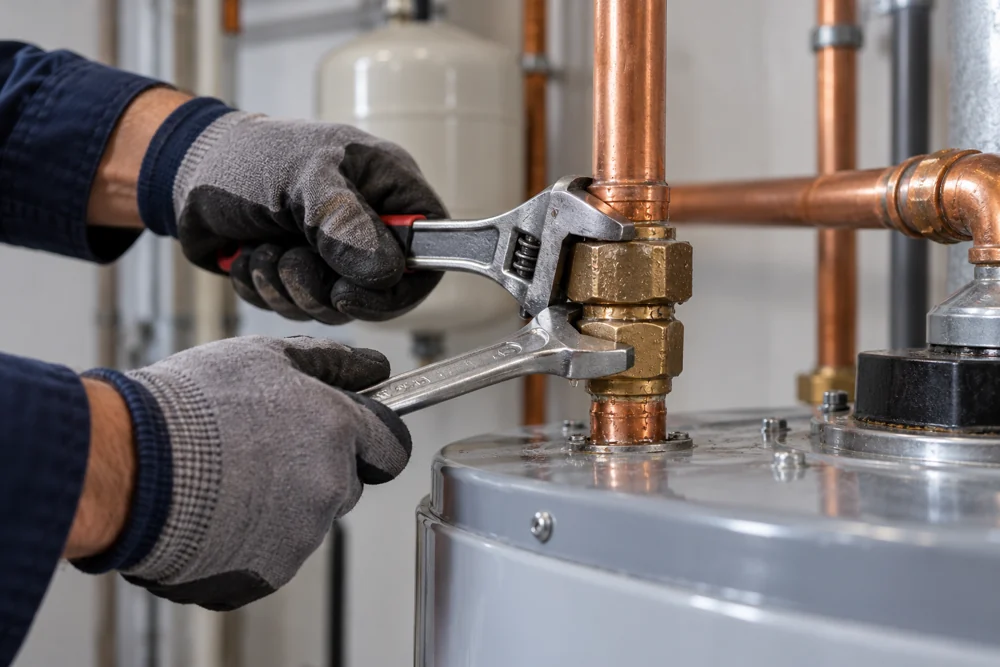
A connection or seal repair may retain the existing unit when the component and equipment condition support it. Ask where the leak starts, which part is proposed and how the affected connection will be checked afterward.
Tankless heating depends on the unit recognizing and responding to hot-water demand. The assessment may involve inlet filtration, flow sensing or delivery conditions. A fixture-side problem should not be treated as proof of a failed control board.
Gas tankless diagnostics may involve ignition, flame sensing, fuel supply, sensors or controls. Use the exact model’s procedure. A recurring code should lead to an explained finding rather than repeated resets or bypassed safety devices.
An internal leak requires locating the failed component and considering condition, parts and warranty. Descaling is not a repair for a physically damaged heat exchanger. Ask how a component repair compares with replacement of the unit.
For applicable gas models, venting, combustion air and condensate conditions can also affect operation. Electric tankless equipment requires its own electrical assessment. The provider should explain which checks apply to your unit.
A defined scope connects the original complaint, the approved work and the result being checked.
Give the model, fuel and Kokomo address. Report the visible code, leak location, affected fixtures and known maintenance history. Gas odor or a carbon monoxide alarm takes priority over a service booking.
Ask what was found and whether it explains both the leak and the loss of hot water. Review compatible parts, labor, any justified cleaning and separate installation corrections before approval.
Qualified service follows the model’s repair and maintenance instructions. If further inspection changes the scope, request the revised finding and price before additional work proceeds.
Ask which water draws, connections and model-specific checks were completed. Keep the work record, maintenance recommendation and contact details for a returning code or drip.
The recommendation should follow a finding, with each part of the estimate explained.
A fitting, seal, sensor or other serviceable component may be repairable when diagnosis supports it. Compare the complete repair, compatible part availability and condition of the remaining unit.
Review Repair Scope →Filter cleaning or descaling may belong in the plan when supported by the equipment and findings. Ask what symptom it should address and whether a separate failed part also needs repair.
Explore Flushing And Descaling →Review the unit, hot-water demand, fuel or electrical supply, venting where applicable, condensate and service access. A new box on the wall is not the whole scope.
Explore Heater Replacement →Ask about applicable manufacturer coverage using the serial number and service record. A covered part does not establish that labor, diagnosis or related installation work is also covered.
A tankless shutdown, a compact installation and a failed supply connection called for different work.
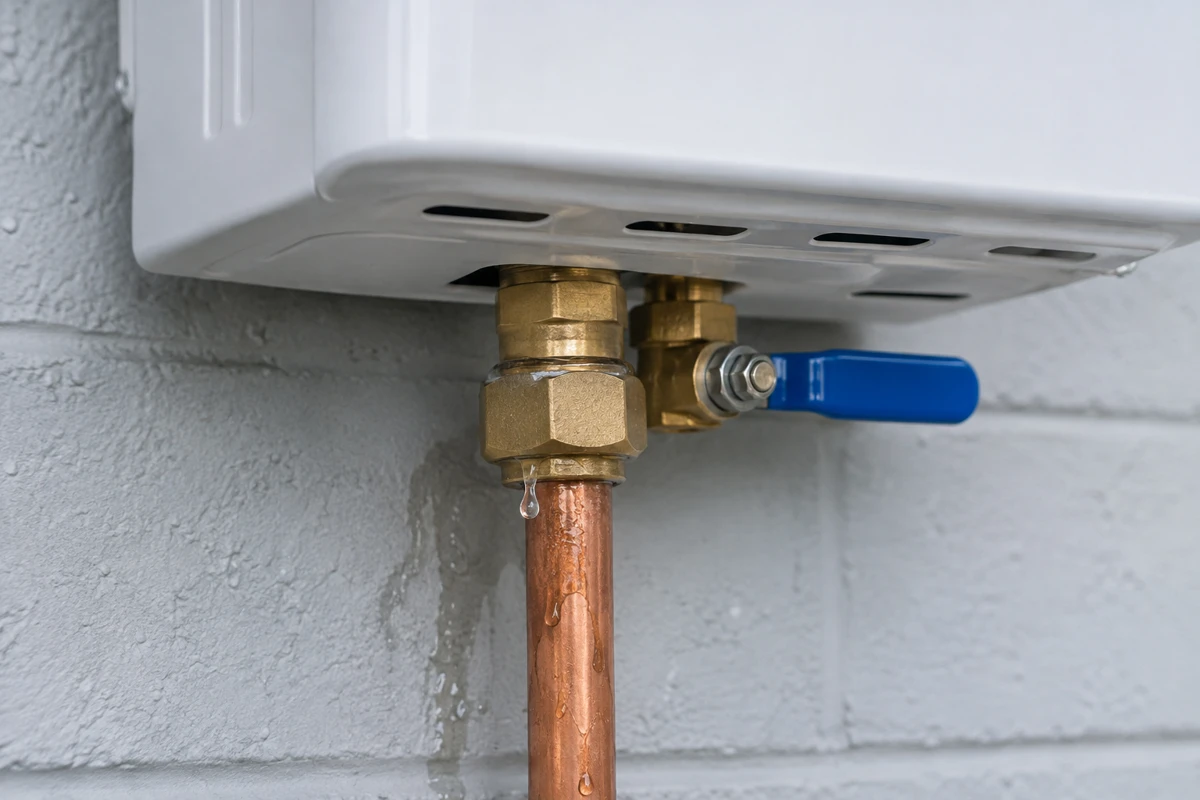
The tankless heater kept shutting down with an error code and also developed a small overnight drip. Both the interruption and the leak needed attention.
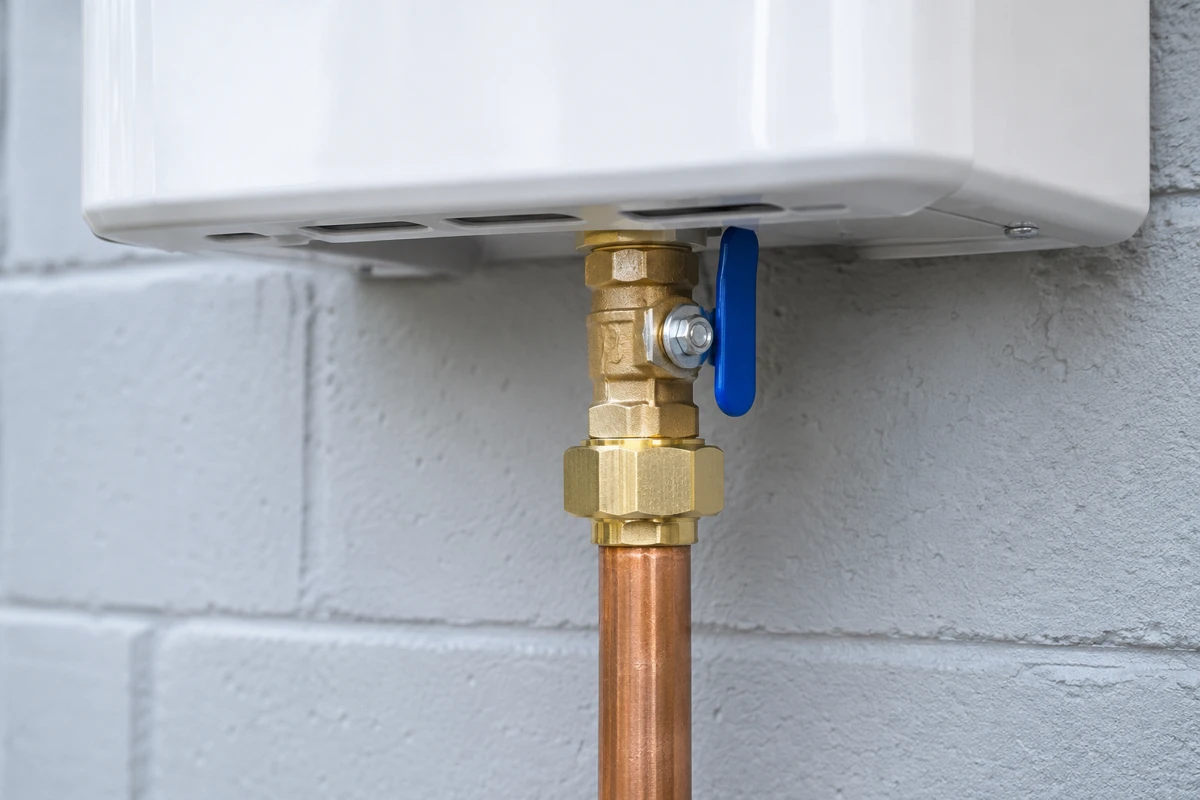
The unit was cleaned, a worn seal was replaced and the homeowner was shown the care routine. The reported error stopped returning and the drip was gone.
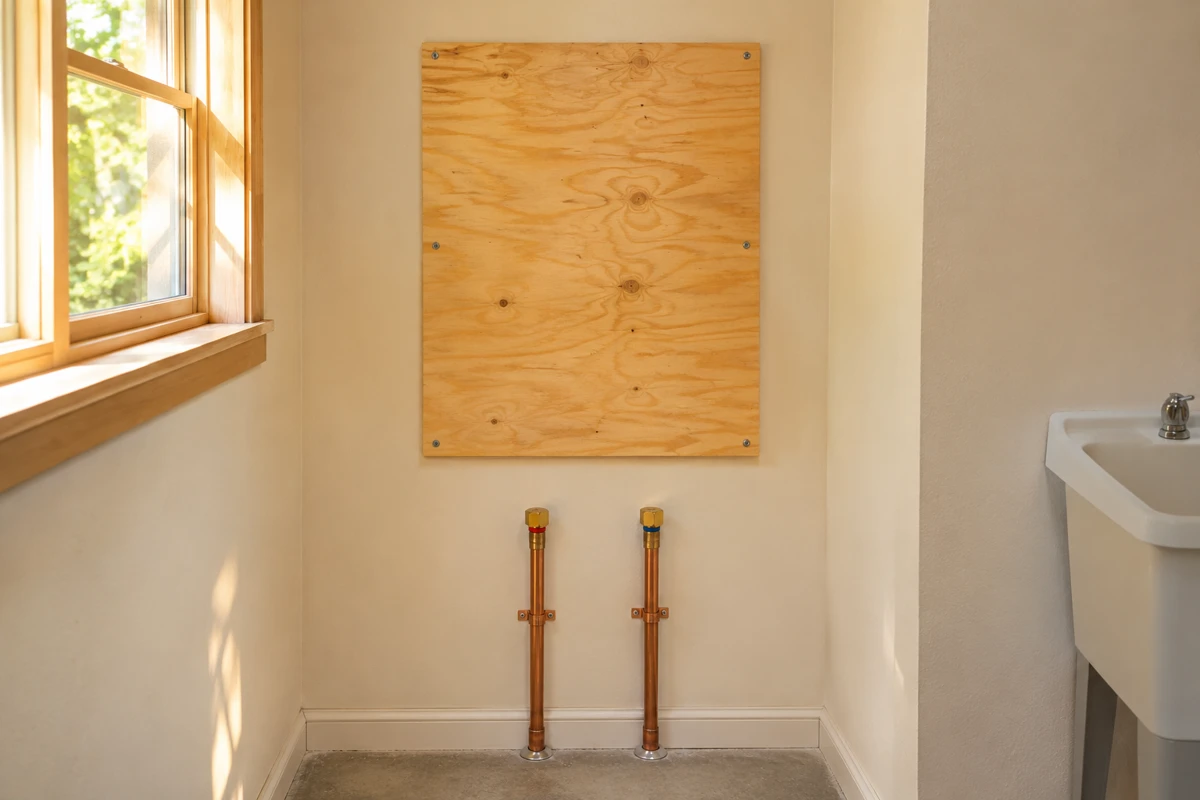
The home needed a tankless installation in a tight utility room. The available space and the finished layout were part of the installation problem to solve.
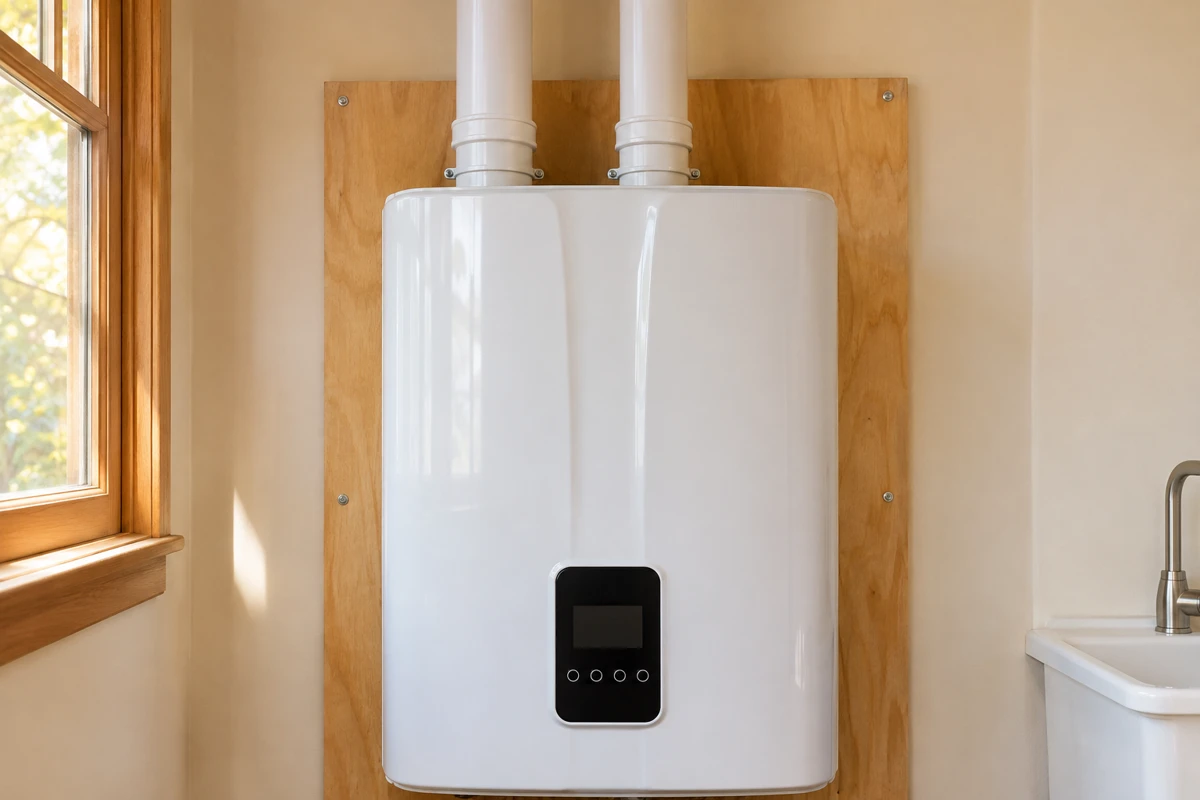
The tankless unit was installed with neat piping, usable floor space was regained and an annual descaling plan was set. The completed layout paired hot-water service with ongoing maintenance planning.
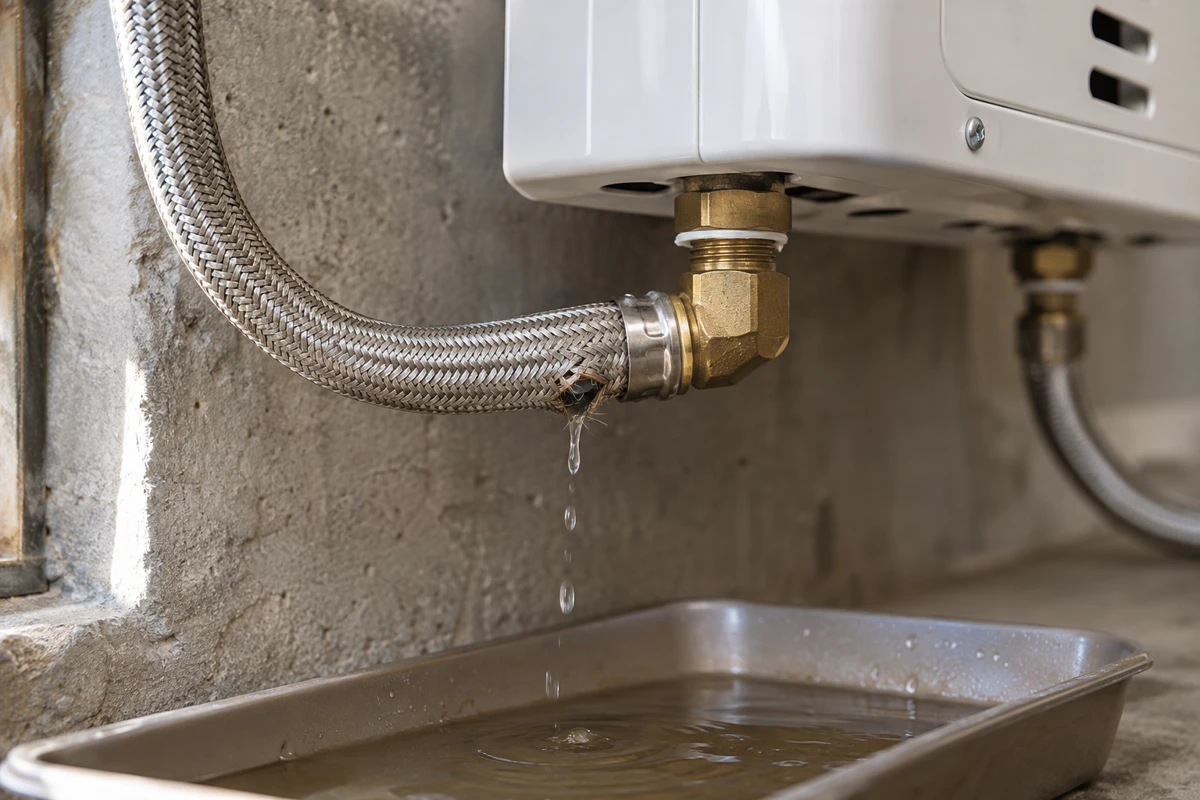
A failed supply connection was sending water across the garage slab. The leak needed stopping and the heater needed checking for further damage.
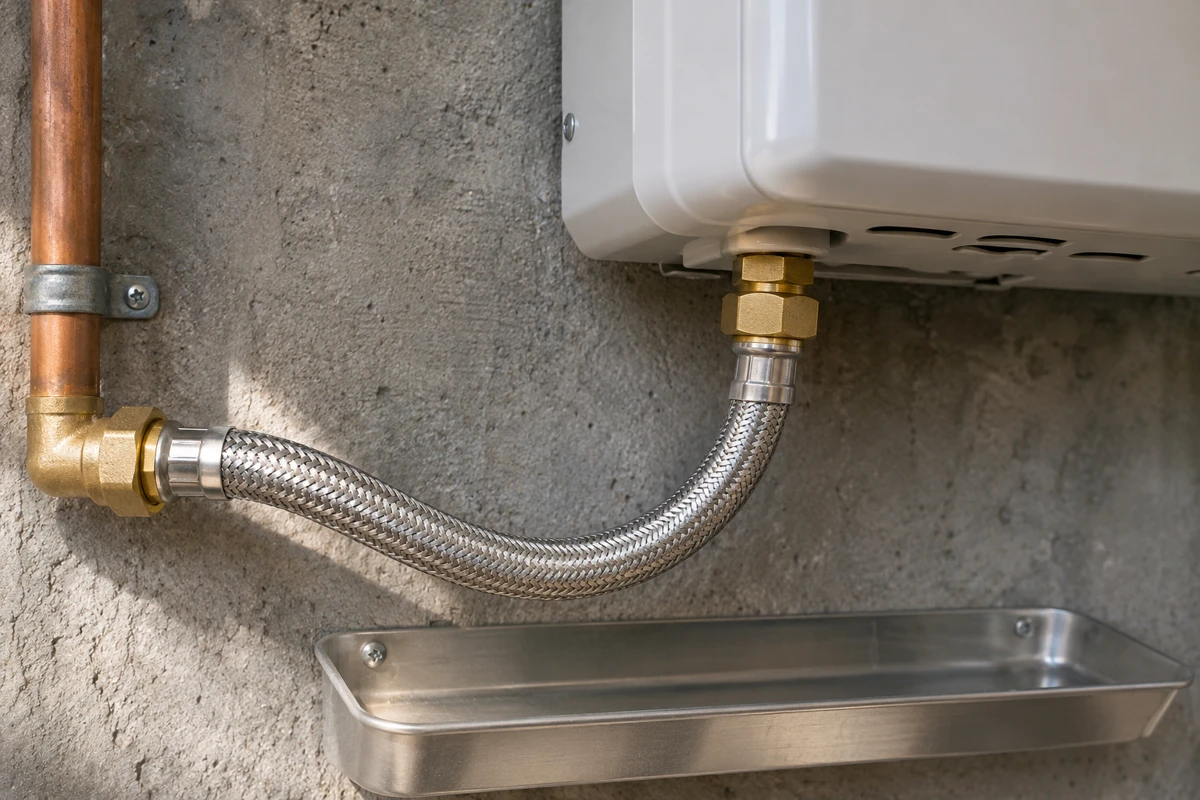
Water and power were shut off, the failed connection was repaired and the heater was checked for further damage. Flooding stopped within the hour and the heater returned to service.
A leak and a shutdown at the same time? Report both, even if the unit temporarily starts working again. Ask whether the proposed work addresses each complaint.
Describe Your Tankless ProblemIt depends on the fault. Cleaning deposits and repairing a failed component are different tasks.
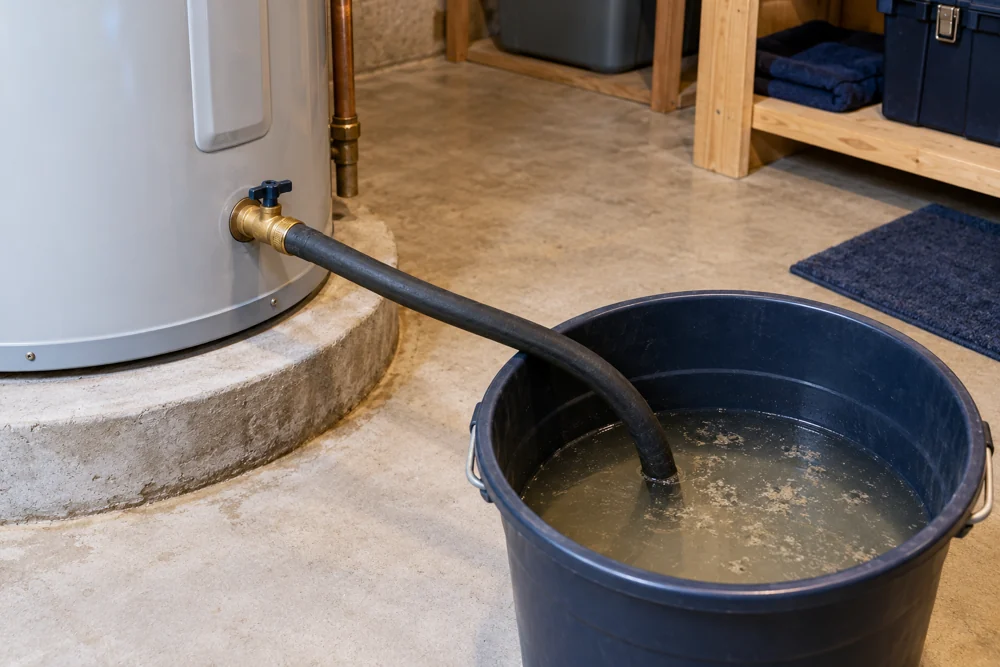
Tankless maintenance can include inlet-screen care, descaling and inspection of the unit and relevant drainage or air filters. The items and interval depend on the product and operating conditions; water quality can affect how often attention is needed.
Ask what evidence supports cleaning, which procedure applies and what will be checked afterward. A flush should not be presented as a guaranteed cure for any error code or every water leak.
Record the date, cleaning or parts work, findings and next recommended inspection. Tell the provider about a softener, treatment system or previous scale finding without assuming all Kokomo homes share the same water conditions.
Accurate equipment, symptom and access details make the first call useful.
Help the provider plan the visit without disturbing the unit or its connections.
The attending provider confirms coverage and scheduling for the individual property.
Diagnosis, compatible parts, labor, access and any separate cleaning or installation correction affect the scope. A union seal, heat-exchanger proposal and condensate-drain repair are different jobs. Ask how part ordering, manufacturer support or a return visit affects the quote.
For a Kokomo garage, exterior unit or exposed pipe route, report known freezing conditions and outages. Built-in freeze protection has model-specific limits and does not automatically protect all external piping. Plan protection with the provider; do not energize a wet or damaged unit just to preserve a freeze feature.
Rinnai: Freeze-Protection Guidance ↗An explained finish includes the repaired area, hot-water operation and any remaining follow-up.
Ask whether the provider checked the original leak or shutdown under relevant operating conditions. If it happened only during a particular water draw, explain that pattern rather than accepting a brief restart as the whole history.
Keep the part description, work record and warranty terms. Clarify whether a remaining recommendation concerns maintenance, a separate installation issue or further diagnostic work.
If a code or drip returns, report its timing and the same safely visible details. Do not open the cabinet, bypass controls or repeatedly reset the heater to keep it running.
Answers about leaks, codes, descaling, cold-water interruptions and a service request.
Water can originate at a connection, service valve, condensate arrangement or an internal component. The first wet point needs identifying. Keep the cover closed and report where water appears; a puddle alone does not establish a failed heat exchanger.
No. Use the exact model’s diagnostic instructions. A code can describe a condition involving flow, ignition, venting, drainage or another system. The provider should explain the checks and finding before recommending a part.
Sometimes, when the seal or connection is the identified fault and the surrounding equipment is suitable to retain. Ask which compatible part is required, what else was affected by water and how operation and leak correction will be checked.
No. A condensing gas unit produces condensate during operation and needs an appropriate drainage route. A leak from a pressurized water fitting is a different problem. Water escaping onto the floor still needs its source and drainage condition assessed.
No. Descaling addresses deposits when the equipment and findings support that maintenance. It does not repair a split connector, damaged seal or physically failed heat exchanger. Ask which work addresses the complaint and whether a separate repair remains.
The provider may need to distinguish a shutdown from flow, fixture or delivery conditions. Report whether other fixtures were running, whether an error appeared and whether all taps are affected. A cold interval alone does not identify the failed component.
Tankless equipment has model-specific flow requirements. A fixture restriction or a unit-side flow finding can affect operation. Explain whether other fixtures work; the provider should establish the cause rather than assume the heater needs replacing.
It depends on the model, condition, parts, warranty and total proposed work. Request the diagnostic finding and a comparison with full replacement. Ask which diagnostic, labor and installation costs remain even if a component is covered.
Follow the installed model’s guidance and property conditions. Navien recommends annual maintenance and notes that harder water can require more frequent attention. Ask which filters, cleaning, drainage and operating checks belong in your unit’s maintenance plan.
Do not assume so. Built-in protection has model-specific requirements and limits, while external piping and drains can remain vulnerable. Discuss exposure and outage planning with the provider. Do not restore power to wet or damaged equipment to force a protection feature.
Leave the building immediately without using switches, phones or the heater inside. From a safe location outside, call 911 and your gas utility’s emergency line. Stay out until cleared. Do not wait for a routine tankless repair appointment.
Give the attending provider the exact brand, model, fuel and installation type and confirm capability before booking. Parts and procedures vary. Brand references on this page do not establish manufacturer authorization for LeakRescue Pros or an attending provider.
The estimate depends on diagnosis, compatible parts, labor, access and related work. Confirm the visit fee and request an itemized scope. Ask how cleaning, manufacturer support, part ordering or a return visit changes the total before approving the repair.
No completion time is guaranteed here. The attending provider confirms appointment availability, model capability, parts and the work required. Explain the loss of hot water or active water spread when asking about the earliest suitable visit.
Technical References · Use the instructions for the actual model. These sources explain service topics and do not replace qualified assessment.
Navien: Tankless Troubleshooting FAQsNavien: Maintenance And DescalingNavien: Condensate And Condensing UnitsRinnai: Operation And MaintenanceRinnai: Freeze ProtectionNIPSCO: Suspected Gas LeaksCall with your address, heater model and what changed. Ask about diagnostic visits, equipment capability, repair scope, fees and availability.
Call (765) 227-1552LeakRescue Pros provides water-heater information and service requests. The attending provider confirms coverage, capability, scheduling, pricing and work terms.